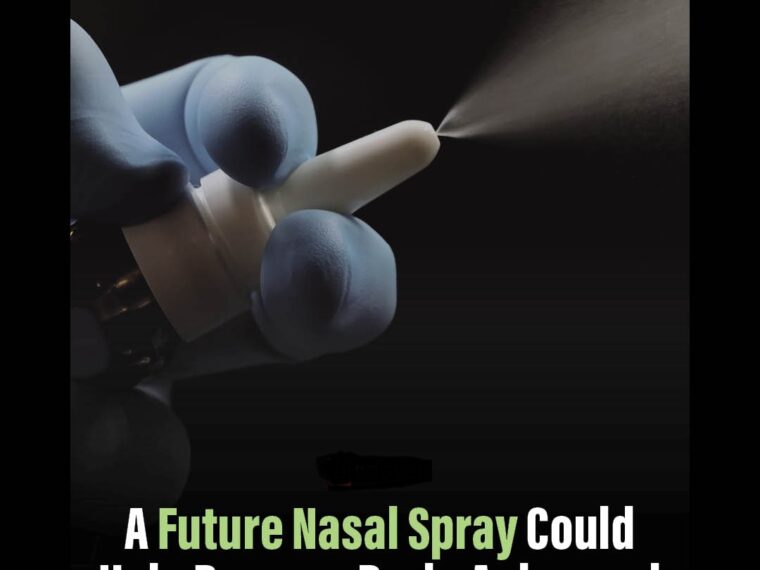
A recent study has generated excitement because it suggests that some age-related changes in the brain may be more reversible than previously believed.
However, it’s important to understand both what the researchers found—and what they haven’t proven yet.
What Did Scientists Actually Study?
Researchers at Texas A&M University developed an experimental nasal spray containing tiny biological particles called extracellular vesicles.
The study was published in the Journal of Extracellular Vesicles.
The treatment was tested in aging mice, not in humans.
What Are Extracellular Vesicles?
Extracellular vesicles are microscopic particles naturally released by cells.
They can carry:
- Proteins
- Lipids
- Genetic material
- MicroRNAs
MicroRNAs help regulate gene activity inside cells and may influence inflammation, repair processes, and cellular aging.
Why Use a Nasal Spray?
One of the biggest challenges in treating brain disorders is the:
Blood-Brain Barrier
This barrier protects the brain but also blocks many medications.
The researchers used intranasal delivery because substances administered through the nose may reach the brain through pathways connected to the nasal cavity.
Potential advantages include:
- Non-invasive delivery
- Direct access to brain tissue
- Avoiding some limitations of traditional drug delivery
What Happened in the Study?
Reduced Brain Inflammation
As brains age, chronic low-level inflammation can develop.
Researchers sometimes call this:
Neuroinflammaging
This process has been associated with cognitive decline and neurodegenerative diseases.
The treatment appeared to reduce inflammatory activity in aging mice.
Improved Cellular Energy Production
The study also found improvements in mitochondrial function.
Mitochondria are structures inside cells responsible for producing energy.
Healthy mitochondria are particularly important for brain cells because neurons require large amounts of energy.
Better Memory Performance
In behavioral testing, treated mice showed improvements in:
- Object recognition
- Learning tasks
- Adaptation to environmental changes
The improvements appeared within weeks and reportedly persisted for several months after treatment.
Does This Mean Brain Aging Has Been Reversed?
Not yet.
The headline is more dramatic than the evidence currently supports.
What the study shows:
✔ Promising results in mice.
✔ Reduced inflammation.
✔ Improved cellular function.
✔ Better performance on memory-related tasks.
What it does not show:
❌ Proven reversal of human brain aging.
❌ A cure for dementia.
❌ An approved treatment for Alzheimer’s disease.
Human clinical trials are still needed.
Could This Help Alzheimer’s Disease?
Next page