
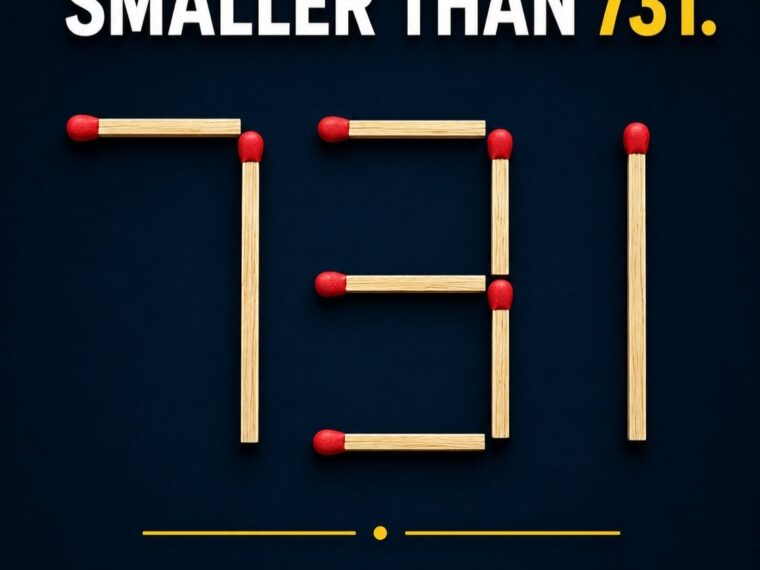
Many difficult riddles are designed to exploit common mental shortcuts.
Our brains naturally:
- Make assumptions
- Fill in missing information
- Seek familiar patterns
A good riddle takes advantage of these tendencies.
The challenge is not intelligence—it’s recognizing the hidden assumption.
The Famous “Einstein’s Riddle”
One of the most famous logic puzzles is often called:
Einstein’s Riddle
It asks participants to determine which person owns a fish based on a long list of clues.
Despite popular myths, there is no strong evidence that Einstein actually created it.
However, it remains one of the world’s best-known logic puzzles.
Benefits of Solving Riddles
Regularly engaging with puzzles may help strengthen:
Concentration
You must focus on details and clues.
Memory
Many puzzles require holding information in mind while solving.
Problem-Solving Skills
Riddles encourage flexible thinking.
Creativity
They often reward unusual approaches rather than obvious ones.
A Few Classic Riddles
Riddle 1
What has hands but cannot clap?
Answer: A clock.
Riddle 2
The more you take away, the larger it becomes. What is it?
Answer: A hole.
Riddle 3
What has a neck but no head?
Answer: A bottle.
Riddle 4
What gets wetter the more it dries?
Answer: A towel.
Riddle 5
I speak without a mouth and hear without ears. What am I?
Answer: An echo.
Do Riddles Measure IQ?
Not really.
While some puzzles require reasoning skills, solving a specific riddle does not accurately measure intelligence.
Success often depends on:
- Prior exposure
- Experience with puzzles
- Vocabulary
- Creativity
- Persistence
Many brilliant people get stuck on simple riddles, while others solve them instantly.
Why Online Riddle Posts Get Shared So Often
Social media loves content that encourages participation.
Posts asking users to:
- Find hidden objects
- Solve puzzles
- Spot differences
- Answer riddles
often receive high engagement because people enjoy testing themselves and comparing answers.
Final Thoughts
Riddles are more than simple entertainment.
They challenge the way we think, encourage curiosity, and remind us that the first answer isn’t always the correct one.
Whether you’re solving a classic logic puzzle, a mathematical challenge, or a tricky word riddle, the real reward isn’t just finding the answer—it’s the mental journey that gets you there. 🧩🧠✨
Here’s a final riddle for you:
The more you share me, the less you have. What am I?
Answer: A secret. 😉