
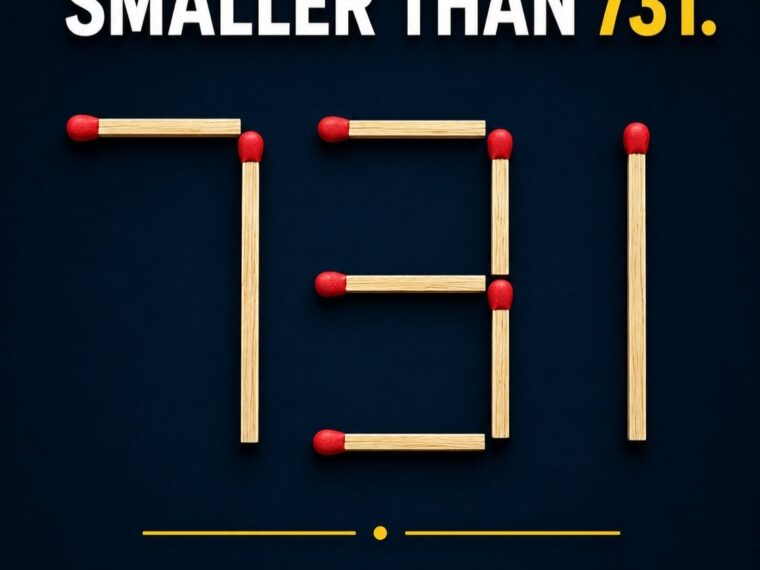


Riddles and brain teasers have entertained people for centuries. Whether shared during a road trip, family gathering, classroom activity, or online challenge, they encourage us to think differently and look beyond the obvious.
Some riddles can be solved in seconds, while others have puzzled people for decades.
Why Are Riddles So Popular?
Riddles challenge the brain in unique ways by encouraging:
- Creative thinking
- Pattern recognition
- Logical reasoning
- Problem-solving skills
Unlike ordinary questions, riddles often rely on hidden assumptions, wordplay, or unexpected perspectives.
The solution is frequently simpler than it first appears.
Different Types of Riddles
1. Logic Riddles
These require careful reasoning.
Example:
If two people can paint a wall in two hours, how long would four people take?
The answer depends on whether everyone can work simultaneously and whether the task can be divided equally.
2. Wordplay Riddles
These exploit multiple meanings of words.
Example:
What has many keys but cannot open a door?
Answer: A piano.
3. Mathematical Brain Teasers
These involve numbers, patterns, or calculations.
Example:
What comes next: 2, 4, 8, 16, 32?
Answer: 64.
4. Lateral Thinking Puzzles
These require thinking outside conventional assumptions.
The solution often seems obvious after it’s explained.
Why Some Riddles Feel Impossible
Next page