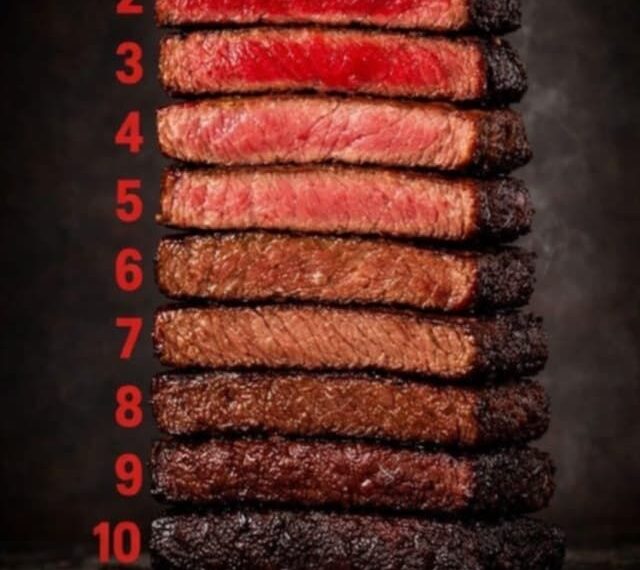


One steak.
Ten different appearances.
And endless debate.
From deep red centers to fully cooked slices with no pink at all, steak doneness is one of the most personal food preferences people have. Some love a soft, juicy center, while others prefer a firmer texture and fully cooked meat.
Professional chefs often discuss the “ideal” doneness for tenderness and flavor, but ultimately the best steak is the one you genuinely enjoy eating.
Understanding Steak Doneness Levels
Different cooking levels affect:
- Texture
- Juiciness
- Tenderness
- Flavor development
- Internal temperature
Here’s a simple breakdown of the most common steak levels:
1–2: Very Rare / Blue Rare
- Cool or lightly warm red center
- Extremely soft texture
- Minimal cooking inside
- Very juicy
This style is lightly seared outside while remaining mostly raw internally.
3–4: Rare to Medium-Rare
- Warm red center
- Tender texture
- Rich juiciness
- Balanced crust and softness
Many chefs consider medium-rare the “sweet spot” because it preserves moisture while developing flavor on the outside.
5–6: Medium
- Warm pink center
- Slightly firmer texture
- Balanced moisture and structure
Medium steak appeals to people who enjoy less redness while still keeping some juiciness.
7–8: Medium-Well
- Slight hint of pink
- Firmer bite
- Less juice
The steak becomes noticeably more cooked throughout.
9–10: Well Done
- Fully cooked center
- No pink
- Firm texture
When cooked carefully, even well-done steak can still remain flavorful, although it typically contains less moisture.
Why Medium-Rare Is So Popular
Many chefs and steak enthusiasts prefer medium-rare because it often creates a balance between:
- Browning on the outside
- Tender texture
- Internal moisture
- Beef flavor
At this stage, fat inside cuts like Ribeye begins to render nicely without drying out the meat excessively.
However, personal preference matters more than trends or food culture debates.
Step-by-Step: How to Cook the Perfect Steak
Step 1: Choose the Right Cut
Next page