
Others can cause severe pain, large skin reactions, and occasionally allergic responses that require medical attention.
Fortunately, most encounters are minor.
The best approach is to avoid touching jellyfish altogether—even those that appear to be dead.
Many people are surprised to learn that detached tentacles can continue to sting long after the jellyfish has washed ashore.
Children are especially tempted to poke them with sticks or pick them up for fun, which is never a good idea.
Watch Out for Stingrays
Stingrays are another common reason beaches raise purple flags.
Despite their intimidating reputation, stingrays usually prefer to avoid humans.
Most injuries happen because someone accidentally steps directly on one buried beneath the sand.
Feeling threatened, the stingray swings its tail in self-defense.
To reduce the risk, many coastal experts recommend doing the famous “stingray shuffle.”
Instead of taking large steps, shuffle your feet slowly across the sandy bottom.
This gentle movement warns nearby stingrays that something is approaching, giving them plenty of time to swim away before you reach them.
Sea Urchins and Hidden Hazards
Not every marine hazard swims through the water.
Sea urchins often remain attached to rocks in shallow areas.
Their sharp spines can easily puncture bare feet, causing painful injuries that sometimes require medical treatment if fragments remain embedded.
Similarly, certain rocky shorelines may contain venomous fish or other creatures that blend perfectly into their surroundings.
The purple flag reminds visitors to stay alert not only while swimming but also while exploring tide pools, reefs, and rocky beaches.
Different Countries May Use Different Flag Systems
Although purple flags are common on many American beaches, especially along the Gulf Coast and Atlantic Coast, not every country follows the exact same warning system.
Some beaches use additional signs alongside the flags.
Others display digital warning boards or post updates through local beach safety apps.
Because beach safety systems vary, it is always worth checking the information board near the lifeguard station when arriving at an unfamiliar beach.
Those signs often explain every flag being flown that day.
What Should You Do If You See One?
Fortunately, seeing a purple flag does not mean you need to pack up your towel and head home immediately.
Instead, follow a few simple precautions:
- Read any posted warnings.
- Ask the lifeguard what marine life has been seen.
- Keep children close by while swimming.
- Avoid touching unfamiliar marine animals.
- Wear water shoes if exploring rocky areas.
- Stay alert while entering and exiting the water.
- Exit the water immediately if instructed by lifeguards.
Most beach visits continue without any problems at all.
The flag simply encourages awareness rather than panic.
If You Get Stung
Even with precautions, accidents can happen.
If you are stung by a jellyfish or another marine animal, leave the water calmly and notify a lifeguard.
Avoid rubbing the affected area, as this may worsen the injury.
Lifeguards are trained to provide appropriate first aid and determine whether additional medical attention is necessary.
If someone experiences difficulty breathing, swelling of the face, dizziness, chest pain, or signs of a severe allergic reaction after a sting, seek emergency medical care immediately.
Fortunately, serious reactions are uncommon, but they should always be treated promptly.
Nature Belongs Here Too
It is easy to think of jellyfish, stingrays, and other marine animals as unwanted visitors.
In reality, we are the visitors.
These animals live in the ocean year-round, and the beach is part of their natural habitat.
The purple flag is not meant to frighten people away from the water. Instead, it reminds us that the ocean is a living ecosystem filled with creatures carrying out their normal daily lives.
Respecting wildlife helps protect both people and the animals themselves.
Watching from a safe distance is always better than attempting to touch or chase marine creatures.
The Bottom Line
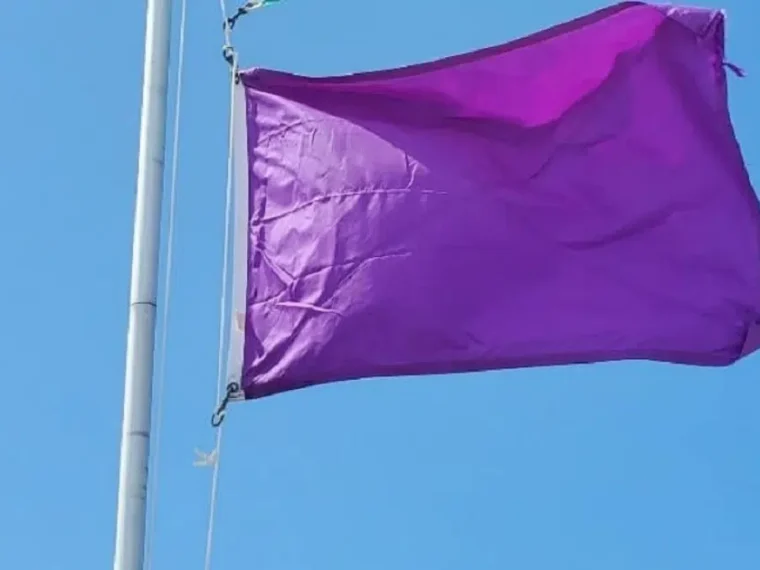
The next time you arrive at the beach and notice a purple flag waving alongside the others, you will know exactly what it means.
It is a warning that potentially dangerous marine life has been spotted nearby. The water may still be calm, sunny, and inviting, but unseen creatures beneath the surface deserve your attention.
That simple purple flag can help prevent painful encounters with jellyfish, stingrays, sea urchins, and other marine animals by encouraging swimmers to stay alert and follow lifeguard guidance.
So before running straight into the waves, take a moment to look at the flags flying above the lifeguard tower. They are one of the easiest—and most effective—ways to understand current beach conditions.
After all, a beautiful day at the beach is even better when you know exactly what the ocean is trying to tell you.