
Discover More
- Coastal wildlife guides
- Surf & Swim
- Beach safety guides
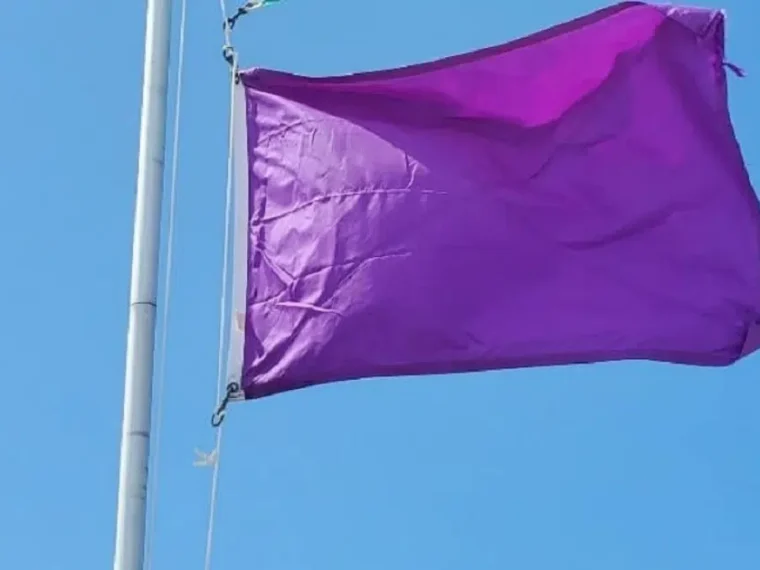
Alright, so you know all those colored flags they put up at the beach? Most people know the basics. Green means the water conditions are generally calm. Yellow means you should be extra careful because conditions are moderate. Red means dangerous surf, and double red means the water is closed to the public. But then there is that one flag that always seems to confuse people: the purple flag.
Have you ever actually noticed it?
I know I must have walked past plenty of purple flags without paying attention to them. One day I happened to look up at the lifeguard tower and thought, Wait… what does that one even mean? I was pretty sure I knew the whole beach flag system already. Green, yellow, red—even double red. But purple? That one seemed completely out of place.
As it turns out, it is an official warning flag, and it serves a very important purpose.
It is not there because someone wanted to add a splash of color to the beach. It is there to help keep visitors safe from hazards that are often impossible to see from the shore.
So what exactly does a purple beach flag mean?
A purple flag warns swimmers that dangerous marine life has been spotted in the area. Lifeguards sometimes refer to these creatures as “marine pests,” although that description makes them sound much less intimidating than they actually are.
These animals are usually not aggressive, and they are certainly not hunting people. However, they can sting, bite, or injure someone if they are disturbed or accidentally stepped on. Because many of them are difficult to spot in the water, the purple flag serves as an early warning so visitors know to be extra cautious.
Some of the animals that may trigger a purple flag include:
- Jellyfish
- Portuguese man o’ war
- Stingrays
- Sea urchins
- Lionfish in some regions
- Venomous fish
- Large schools of harmful marine organisms
Exactly which animals are being reported depends on the location. Beaches in Florida may experience different marine hazards than beaches in California, Australia, or the Mediterranean.
That is why it is always worth asking a lifeguard exactly what prompted the warning if you are curious.
It Doesn’t Mean the Water Is Closed
This is one of the biggest misconceptions people have.
A purple flag does not automatically mean swimming is prohibited.
Unlike a double red flag, which means the water is officially closed, a purple flag simply means you should be aware that marine wildlife capable of causing injury is nearby.
In many cases, people continue swimming while exercising extra caution.
Lifeguards monitor the situation closely. If dangerous surf develops at the same time, you may see multiple flags flying together.
For example:
- Green + Purple: Calm water, but dangerous marine life is present.
- Yellow + Purple: Moderate surf and marine life hazards.
- Red + Purple: Rough water plus potentially harmful sea creatures.
Each flag communicates a different type of risk, allowing beachgoers to make informed decisions.
Why Marine Animals Come Close to Shore
Many people assume that seeing a purple flag means something unusual is happening in the ocean.
Sometimes that is true, but often it is completely normal.
Marine animals naturally move closer to shore for several reasons.
Ocean currents can carry jellyfish toward beaches after storms or changes in wind direction. Warm water temperatures may increase jellyfish populations during certain seasons. Stingrays often rest in shallow sandy areas where the water is warmer, making them easy to accidentally step on.
Some fish enter shallow water in search of food, while others are simply following their normal migration routes.
In other words, the purple flag does not necessarily signal an emergency—it often reflects natural ocean conditions.
Jellyfish Are the Most Common Reason
If you ask experienced lifeguards what usually causes a purple flag, jellyfish are near the top of the list.
Some jellyfish produce only mild stings that feel similar to a bee sting.
Next page