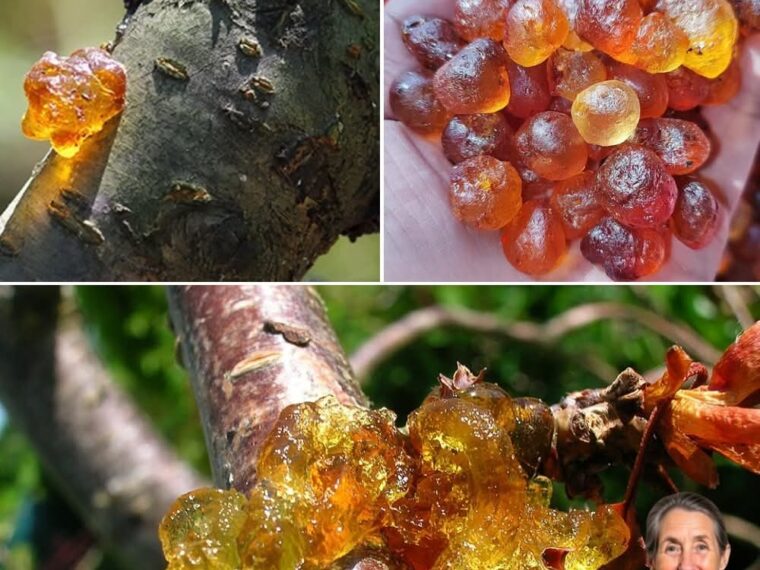
Nature has long provided ingredients that have been valued in traditional cuisines and wellness practices. One fascinating example is peach tree resin, also known as Tao Jiao (桃胶) in Chinese. This amber-colored, jelly-like resin naturally seeps from the bark of peach trees and has been used for centuries in traditional Chinese cuisine and herbal practices.
After soaking in water, the hardened resin transforms into a soft, gelatinous texture that is often added to soups, desserts, and sweet beverages. It has gained popularity worldwide for its unique texture and reputation as a beauty and wellness food.
While many traditional claims surrounding peach tree resin have not been confirmed by modern scientific research, it remains an interesting natural ingredient that can be part of a balanced diet.
Here’s what you should know about peach tree resin, its traditional uses, and its potential benefits.
What Is Peach Tree Resin?
Peach tree resin is a natural gum released by peach trees when the bark is damaged or stressed. Similar to how some trees produce sap, peach trees secrete this sticky substance as part of their natural protective process.
Once collected and dried, the resin forms hard golden or amber-colored crystals.
When soaked for several hours, these crystals absorb water and become soft, translucent, and pleasantly chewy.
Its mild flavor makes it easy to pair with fruits, herbs, and lightly sweetened desserts.
Nutritional Profile
Although peach tree resin is not considered a major source of vitamins or minerals, it contains naturally occurring plant polysaccharides and soluble fiber-like compounds that contribute to its gelatinous texture.
It is also:
- Naturally low in fat
- Low in protein
- Relatively low in calories
- Free of cholesterol
Most of its nutritional appeal comes from its texture rather than its nutrient density.
1. Traditionally Used to Support Skin Hydration
One of the most well-known traditional uses of peach tree resin is promoting healthy-looking skin.
In traditional Chinese cuisine, it is often referred to as a “beauty food.”
Although there is limited scientific evidence showing it directly improves skin health, staying well hydrated and eating a balanced diet rich in fruits and vegetables are both important for maintaining healthy skin.
Peach tree resin is commonly enjoyed as part of hydrating desserts and soups.
2. May Contribute to Hydration
Because soaked peach tree resin absorbs large amounts of water, it is usually consumed in liquid-based dishes.
These recipes can help increase overall fluid intake, especially when prepared with fruits rich in water content.
Proper hydration supports:
- Healthy skin
- Digestion
- Temperature regulation
- General well-being
3. Provides Soluble Fiber-Like Compounds
Peach tree resin contains natural plant gums that behave similarly to soluble fiber.
A diet containing adequate fiber may support:
Next page