Few things are more refreshing on a hot day than slicing open a ripe watermelon.
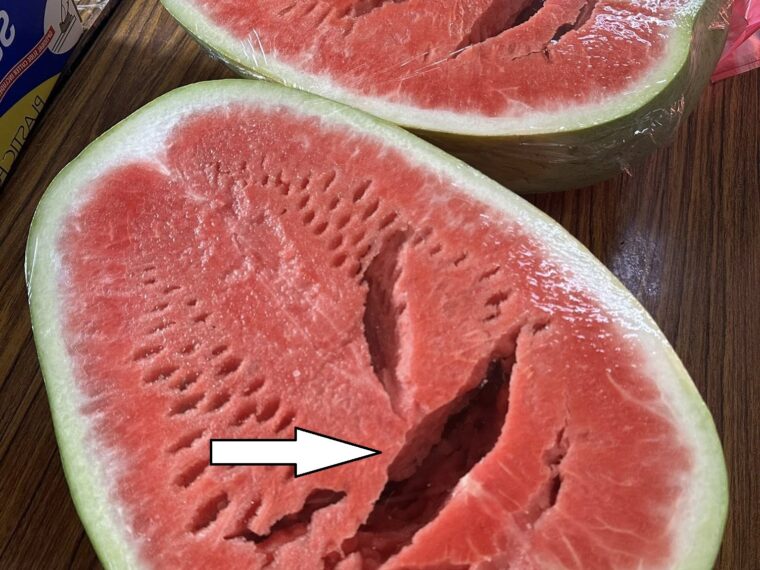
But what happens when you cut into one and notice strange cracks, hollow spaces, or loose, grainy flesh inside?
Many viral posts claim these watermelons are “dangerous” or filled with harmful chemicals. Some even say they should be thrown away immediately.
So, is that true?
Not necessarily.
While unusual internal cracks can sometimes indicate poor quality, overripeness, or growing conditions, they do not automatically mean the watermelon is unsafe to eat. Understanding why these cracks appear can help you decide whether the fruit is still good—or whether it’s best to discard it.
Let’s separate fact from fiction.
Why Watermelons Sometimes Develop Internal Cracks
Watermelons grow quickly, especially during warm weather.
If growing conditions change rapidly, the inside of the fruit may expand faster than the rind can keep up.
This can lead to:
- Hollow spaces
- Internal cracks
- Split flesh
- Uneven texture
These changes are surprisingly common and often result from natural growing conditions rather than contamination.
Factors that may contribute include:
- Sudden heavy rainfall after dry weather
- Irregular watering
- Rapid growth during hot temperatures
- Certain watermelon varieties
- Natural pollination differences
In many cases, the watermelon is simply less appealing—not necessarily unsafe.
What Is “Hollow Heart”?
One of the most common reasons for cracks is a condition known as hollow heart.
Despite its alarming name, hollow heart is not a disease.
It develops when the fruit grows faster than its internal tissues can fully develop, leaving empty spaces or cracks inside.
Researchers have found that hollow heart is often linked to incomplete pollination during flowering rather than chemical use.
The watermelon may still be perfectly edible if:
- The flesh smells fresh
- The texture is firm
- There is no mold
- The taste is normal
The only real downside is cosmetic appearance and a slightly different texture.
The Viral Chlorfenuron Claim
Many social media posts claim that internal cracks prove a watermelon was treated with chlorfenuron, a plant growth regulator.
This claim has circulated online for years.
However, agricultural experts say that internal cracking alone cannot determine whether chlorfenuron was used.
Watermelons can develop cracks naturally for many different reasons.
Likewise, many watermelons grown using approved agricultural practices never develop hollow areas at all.
Simply looking at the inside of a watermelon is not a reliable way to identify how it was grown.
When Should You Avoid Eating a Watermelon?
Although cracks themselves aren’t necessarily dangerous, there are situations where you should throw the fruit away.
Discard the watermelon if you notice:
1. Sour or Fermented Smell
Fresh watermelon should smell light and sweet.
If it smells sour, alcoholic, or fermented, bacteria or yeast may have begun breaking down the fruit.
2. Slimy Texture
Healthy watermelon flesh is juicy but still firm.
If the surface becomes slimy or sticky, spoilage has likely started.
3. Mold
Next page