
Visible mold is an obvious sign that the fruit should not be eaten.
Mold may appear as:
- White patches
- Green fuzz
- Black spots
- Blue discoloration
If mold is present, discard the entire watermelon.
4. Dark or Discolored Flesh
Healthy watermelon ranges from bright pink to deep red.
Large brown, black, or gray areas may indicate decay.
5. Unpleasant Taste
If the watermelon tastes bitter, fizzy, fermented, or otherwise unusual, stop eating it.
Fresh watermelon should always taste clean and naturally sweet.
The Health Benefits of Watermelon
When fresh and properly stored, watermelon is one of summer’s healthiest fruits.
It contains around 90% water, making it excellent for staying hydrated during hot weather.
Watermelon also provides:
- Vitamin C
- Vitamin A
- Potassium
- Magnesium
- Lycopene
- Citrulline
These nutrients support normal body functions and make watermelon a nutritious addition to a balanced diet.
Lycopene: The Red Pigment
The deep red color of watermelon comes from lycopene, a natural antioxidant also found in tomatoes.
Research suggests lycopene helps protect cells from oxidative stress as part of an overall healthy diet.
The amount varies depending on:
- Variety
- Ripeness
- Growing conditions
Citrulline and Blood Flow
Watermelon is one of the richest natural sources of citrulline, an amino acid.
Inside the body, citrulline can be converted into arginine, which plays a role in producing nitric oxide.
Nitric oxide helps blood vessels relax and supports healthy circulation.
However, eating watermelon should not be viewed as a treatment for medical conditions.
How to Choose a Good Watermelon
Choosing the perfect watermelon starts before you ever cut it open.
Here are several signs growers recommend.
Look for the Field Spot
The field spot is the area where the watermelon rested on the ground.
A creamy yellow field spot usually indicates the fruit ripened naturally.
A white or pale spot may suggest it was picked too early.
Pick It Up
A ripe watermelon should feel surprisingly heavy for its size.
The extra weight usually reflects high water content.
Check the Shape
Choose fruits that are:
- Symmetrical
- Evenly shaped
- Free from deep dents
Odd bumps or irregular growth sometimes indicate uneven development.
Examine the Skin
The rind should look:
- Firm
- Dull rather than shiny
- Free from soft spots
Very glossy watermelons may not yet be fully ripe.
Proper Storage
Whole watermelons can usually remain at room temperature until cut.
Once sliced:
- Cover tightly.
- Refrigerate promptly.
- Eat within three to five days.
Never leave cut watermelon at room temperature for extended periods, as bacteria grow rapidly on cut fruit.
Common Myths About Watermelons
Myth 1: Every Cracked Watermelon Is Dangerous
False.
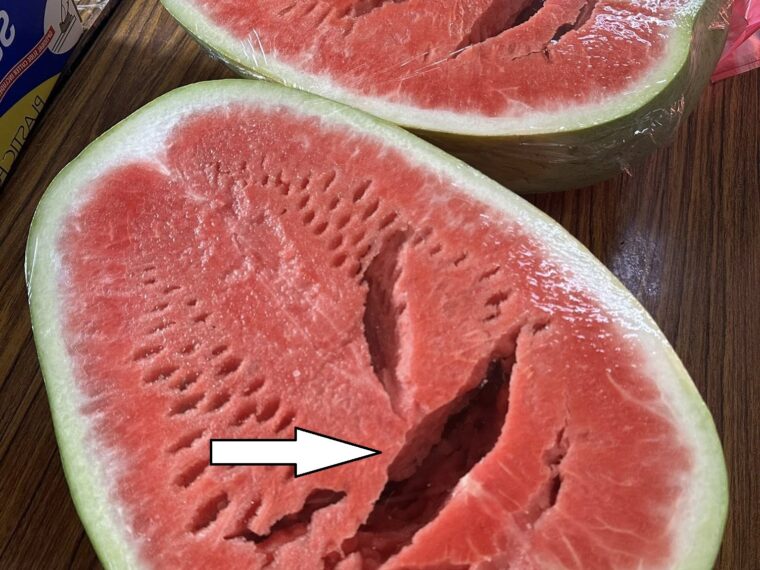
Many cracked watermelons simply have hollow heart and remain safe if fresh.
Myth 2: Cracks Always Mean Chemicals Were Used
False.
There is no reliable way to determine this from appearance alone.
Myth 3: Seedless Watermelons Are Artificial
False.
Seedless watermelons are produced through selective breeding techniques, not genetic modification in most commercial markets.
Myth 4: A Hollow Watermelon Has No Nutritional Value
False.
Even watermelons with hollow heart still contain vitamins, minerals, and water.
The texture may simply be less enjoyable.
Trust Your Senses
When deciding whether to eat any fruit, your senses are often your best guide.
Ask yourself:
- Does it smell fresh?
- Does it look normal?
- Is the texture firm?
- Does it taste as expected?
If the answer is yes, internal cracks alone usually aren’t a reason to throw it away.
If several signs of spoilage appear together, it’s safer to discard the fruit.
Final Thoughts
Finding cracks or hollow spaces inside a watermelon can certainly be surprising, but it doesn’t automatically mean the fruit is dangerous.
Most internal cracking results from natural growing conditions or a common disorder known as hollow heart.
Instead of relying on alarming social media claims, look for genuine signs of spoilage such as mold, sour odors, slimy texture, or unusual taste.
A fresh, properly stored watermelon remains one of the most hydrating and nutritious fruits you can enjoy during the summer.
So the next time you slice one open and discover a few internal cracks, don’t panic.
Take a closer look, trust your senses, and let the overall condition of the fruit—not internet myths—guide your decision.