Sometimes the most powerful garden tricks aren’t expensive fertilizers or complicated systems — they’re simple, humble, and already sitting in your kitchen trash. One of the most overlooked yet surprisingly effective gardening “ingredients” is the eggshell.
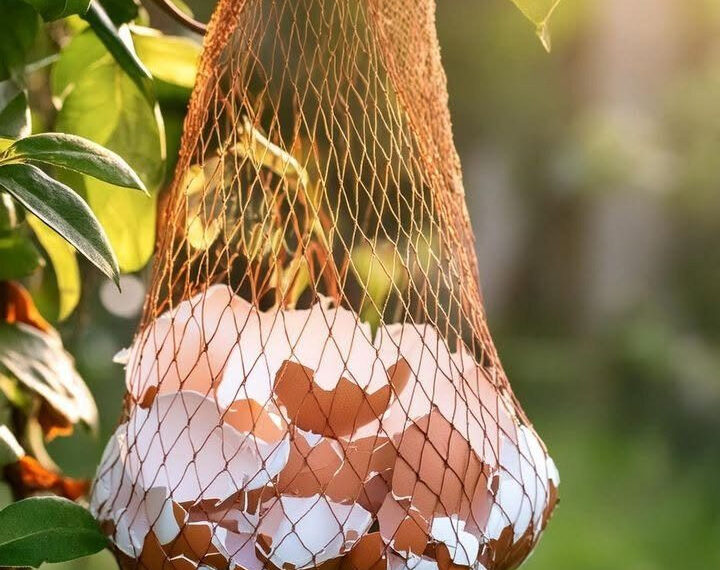
Instead of tossing them away, gardeners across generations have discovered that hanging a mesh bag filled with crushed eggshells can serve multiple purposes: deterring pests, enriching soil, supporting plant health, and even improving garden balance naturally.
Think of this as a recipe for a healthier, more resilient garden — using nothing more than what you’d normally discard.
Ingredients (Garden Essentials)
- 12–24 clean, dried eggshells
- 1 small breathable mesh bag (onion bag, produce bag, or fine net bag)
- 1 piece of twine or garden string
- Optional: mortar & pestle or rolling pin for crushing
- Optional additions: crushed garlic skins, dried citrus peels, or herbs
Step 1: Prepare the Eggshells
Start by collecting eggshells from your kitchen. Wash them thoroughly to remove any egg residue, which can attract unwanted pests or create odors. Allow them to dry completely — either air-dry for a few hours or use a low oven temperature for faster results.
Once dry, lightly crush the eggshells. You can do this with your hands, a rolling pin, or a mortar and pestle. The goal is not to powder them completely, but to create small, rough pieces that will be effective both as a pest deterrent and as a slow-release mineral source for your plants.
Step 2: Fill the Mesh Bag
Place the crushed eggshells into your mesh bag. If you’re adding optional ingredients like garlic skins, citrus peels, or dried herbs, mix them in at this stage. These additions can boost the bag’s effectiveness by adding extra scents that repel insects or provide minor nutrient contributions to the soil.
Tie the bag securely with garden twine or string, leaving a loop at the top for hanging.
Step 3: Hang Strategically in the Garden
Choose locations where the bag will be most effective:
- Near plants that are commonly targeted by pests (tomatoes, peppers, cabbages, roses)
- Above or near seedling beds to protect young plants
- Anywhere you notice slugs, snails, or other soft-bodied pests entering
The eggshells act as a physical barrier. Slugs and snails dislike crawling over sharp edges, so the mesh bag discourages them from approaching. The scent from optional garlic or citrus additions also repels other insects.
Step 4: Additional Benefits
Beyond pest control, eggshells offer multiple long-term benefits for your garden:
- Calcium Enrichment – Eggshells are composed mostly of calcium carbonate. As they slowly break down in soil, they provide essential calcium, which helps prevent blossom-end rot in tomatoes, peppers, and eggplants.
- Soil Aeration – Placing crushed shells directly into the soil around plants can improve aeration and drainage, creating a healthier root environment.
- pH Balance – Eggshells are mildly alkaline and can help reduce soil acidity over time, creating a more balanced growing medium.
- Eco-Friendly Gardening – Reusing eggshells reduces kitchen waste while naturally improving your garden. No chemicals or synthetic additives are required.
Step 5: Maintenance
- Check the bags every few weeks to ensure they remain intact.
- Refresh the eggshells and optional ingredients every season or when they start to degrade.
- Remove any bags that become moldy or overly damp to prevent attracting unwanted pests.
With minimal effort, this simple garden “remedy” can protect plants, enhance soil, and reduce the need for chemical interventions. It’s a low-cost, sustainable approach that leverages a natural resource often overlooked in our daily routines.
Tips for Maximum Effectiveness
- Pair with Companion Planting: Plant pest-repelling herbs like basil, mint, or marigold near the eggshell bag for amplified protection.
- Combine with Mulching: Spread crushed eggshells around plant bases in addition to hanging the bag to create a barrier at ground level.
- Experiment with Placement: Different pests respond to different deterrents, so adjust bag placement as needed throughout the season.
Why This Works
The success of the eggshell bag is a combination of physical deterrence, chemical cues, and soil enrichment. Slugs and soft-bodied insects avoid sharp textures, while strong scents from garlic or citrus confuse or repel others. Simultaneously, the slow release of minerals strengthens plant health, making them less susceptible to disease and stress.
In short, it’s a multitasking garden tool: protect, nourish, and recycle — all in one simple mesh bag.
Final Thoughts
Gardening doesn’t have to be complicated or expensive. Some of the most effective strategies are right under our noses—or in our kitchens. Hanging a mesh bag of eggshells is a testament to ingenuity, resourcefulness, and eco-conscious gardening.
So next time you crack an egg, don’t toss the shells. Transform them into a garden remedy that can help your plants thrive, protect your crops from pests, and even give your garden a natural calcium boost. It’s simple, effective, and a little reminder that sometimes the best solutions are the ones you’ve been discarding all along.