July is a crucial month for tomato plants. By this point, plants are usually well established, the first fruits are beginning to ripen, and harvest season is just around the corner. However, it is also the time when many gardeners unknowingly make mistakes that can reduce yields, encourage disease, or lead to small, cracked, or flavorless tomatoes.
If you want a plentiful harvest of juicy, delicious tomatoes through the end of summer, here are the seven most common mistakes to avoid in July.
1. Watering Too Much or Too Little
Watering is perhaps the most challenging aspect of growing tomatoes during hot summer weather.
Many gardeners assume that daily watering is the best approach. In reality, frequent shallow watering encourages roots to remain near the surface, making plants more vulnerable to drought.
On the other hand, insufficient watering can stress plants, causing:
- Wilting leaves
- Reduced fruit growth
- Blossom-end issues
- Poor fruit development
The Right Approach
✅ Water deeply at the base of the plant.
✅ Water 2 to 3 times per week, depending on weather conditions.
✅ Water early in the morning or in the evening.
✅ Avoid wetting the leaves.
Consistent watering also helps prevent tomatoes from splitting.
2. Forgetting to Mulch
Under the intense July sun, soil can lose moisture very quickly.
Without mulch, the soil dries out faster and roots are exposed to large temperature fluctuations.
Why Mulch Is Essential
Mulching helps:
- Retain soil moisture
- Reduce watering needs
- Suppress weeds
- Protect roots from excessive heat
Good mulch options include:
- Straw
- Dried grass clippings
- Fallen leaves
- Mature compost
A layer of 2 to 4 inches (5 to 10 cm) is generally enough to provide effective protection.
3. Letting Every Sucker Grow
Tomato suckers are the shoots that appear between the main stem and side branches.
While some determinate varieties require little or no pruning, indeterminate varieties can quickly become overgrown.
When too many suckers develop:
- Air circulation decreases
- Disease risk increases
- Plant energy becomes spread too thin
What Should You Do?
Remove suckers regularly while they are still small.
This allows the plant to focus more energy on fruit production rather than excess foliage.
4. Failing to Support Plants Properly
By July, tomato plants can become heavy with developing fruit.
Without adequate support, stems may bend or break.
Poor support can lead to:
- Broken branches
- Fruits touching the soil
- Increased disease problems
The Solution
Use:
- Strong stakes
- Tomato cages
- Trellises
- Garden ties
Check supports regularly and secure branches as plants continue to grow.
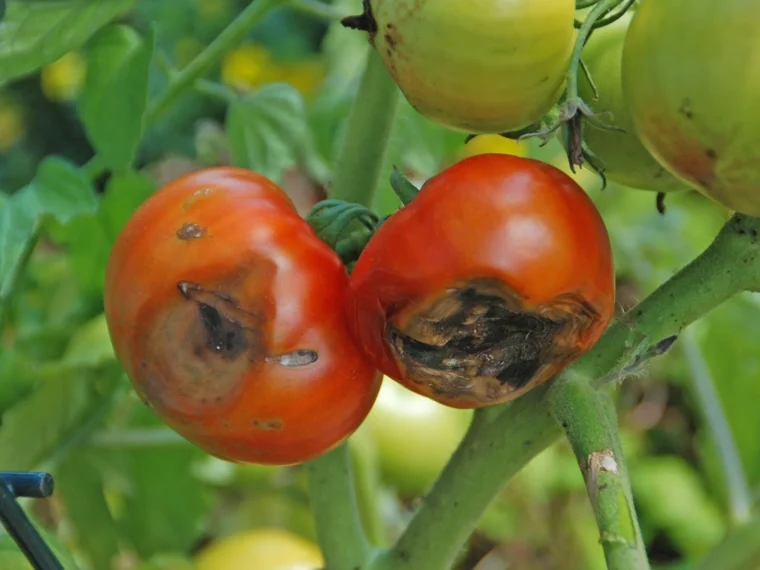
5. Neglecting Disease Prevention
Warm temperatures and humidity create ideal conditions for many tomato diseases.
Common problems include:
- Early blight
- Late blight
- Powdery mildew
- Leaf spot diseases
Once disease spreads, it can quickly affect the entire plant.
Prevention Tips
✅ Remove damaged leaves.
✅ Improve air circulation.
✅ Avoid watering the foliage.
✅ Keep plants properly spaced.
✅ Inspect plants frequently for early signs of disease.
Early action is often the key to preventing major problems.
6. Overfeeding With Fertilizer
Many gardeners assume that more fertilizer means more tomatoes.
Unfortunately, excessive feeding, especially with nitrogen-rich fertilizers, often encourages leafy growth instead of fruit production.
Signs of over-fertilizing include:
- Large, lush leaves
- Rapid foliage growth
- Few flowers
- Low fruit production
The Better Option
Choose a balanced fertilizer formulated for tomatoes and follow application instructions carefully.
During fruiting season, plants typically benefit from nutrients that support flower and fruit development rather than excessive leaf growth.
7. Waiting Too Long to Harvest
Many gardeners leave tomatoes on the vine too long, hoping for perfect ripeness.
While vine-ripened tomatoes are delicious, waiting too long can increase the risk of:
- Cracking
- Pest damage
- Rot
- Bird attacks
When to Harvest
Pick tomatoes when they have developed most of their mature color and feel slightly firm.
They will continue to ripen after harvesting while retaining excellent flavor.
Bonus Tip: Keep an Eye on the Weather
July weather can change quickly.
Heat waves, heavy summer storms, and periods of high humidity can all affect tomato production.
Regularly inspecting your plants allows you to:
✅ Catch problems early.
✅ Adjust watering schedules.
✅ Prevent disease outbreaks.
✅ Maximize yields.
Key Takeaways
🍅 Water deeply but not excessively.
🍅 Mulch to preserve moisture and protect roots.
🍅 Remove unnecessary suckers.
🍅 Provide strong support for growing plants.
🍅 Watch carefully for signs of disease.
🍅 Avoid over-fertilizing.
🍅 Harvest tomatoes at the right time.
By avoiding these seven common mistakes, you can significantly improve the health of your plants and enjoy a larger, tastier tomato harvest throughout the summer.
What About You?
🍅 Option 1: My biggest challenge is watering correctly.
🍅 Option 2: I sometimes forget to prune and support my plants.
🍅 Option 3: Thankfully, my tomatoes are thriving this year!
Share your gardening tips and experiences in the comments! 🌱🍅✨