
- React instantly
- Form opinions immediately
- Simplify complex issues
- Choose sides quickly
Social media especially amplifies emotional reactions because strong emotions spread faster than careful reflection.
But complex human problems rarely have:
- One simple explanation
- One perfect solution
- One universal truth
Wisdom often requires tolerating uncertainty long enough to understand nuance.
That takes patience.
Why Reflection Matters
Reflection allows people to examine:
- Their assumptions
- Emotional reactions
- Motivations
- Biases
- Patterns of behavior
Without reflection, people often repeat:
- Emotional mistakes
- Harmful habits
- Social conditioning
- External expectations
Many individuals spend years following paths they never consciously chose because they never paused long enough to ask:
“Why do I believe this?”
“Who taught me this?”
“Does this truly align with my values?”
Self-awareness acts like an internal compass.
Without it, outside voices easily dominate.
Emotional Manipulation Often Looks Convincing
Manipulation is rarely obvious.
It often appears through:
- Fear
- Shame
- False urgency
- Excessive flattery
- Emotional dependency
- Simplified promises
People are especially vulnerable during periods of:
- Loneliness
- Anxiety
- Uncertainty
- Low self-esteem
- Emotional exhaustion
That is why critical thinking involves both emotional awareness and intellectual reasoning.
Strong emotions can cloud judgment even in intelligent people.
Intelligence Alone Does Not Prevent Deception
History repeatedly shows that highly intelligent individuals can still:
- Believe misinformation
- Follow harmful movements
- Ignore warning signs
- Defend false beliefs emotionally
Why?
Because human beings are emotional creatures first and rational creatures second.
Critical thinking requires ongoing effort, not simply intelligence.
It involves:
- Humility
- Curiosity
- Emotional regulation
- Openness to correction
The Importance of Intellectual Humility
One of the wisest things a person can say is:
“I might be wrong.”
Intellectual humility does not weaken people.
It strengthens them.
It allows growth.
People who assume they already know everything often stop learning entirely.
Meanwhile, people willing to question themselves continue evolving.
This balance between confidence and humility is part of genuine wisdom.
Why Simple Quotes Feel Powerful
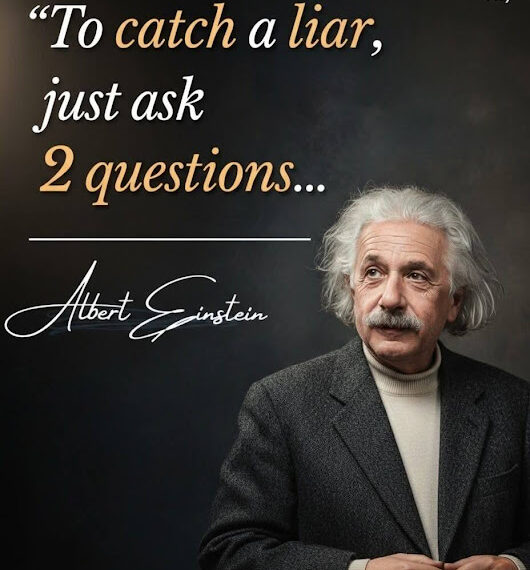
Short philosophical messages spread widely online because they condense complicated truths into emotionally memorable ideas.
Statements about:
- Freedom
- Wisdom
- Deception
- Awareness
- Human behavior
often resonate deeply because they touch universal experiences.
Most people have experienced moments when they realized:
- They trusted the wrong person
- They believed something misleading
- They ignored their intuition
- They followed the crowd too easily
These realizations can become powerful turning points.
Learning Through Experience
Unfortunately, some lessons only become fully understood through experience.
People often develop wisdom after:
- Betrayal
- Failure
- Embarrassment
- Loss
- Disappointment
Painful experiences force reflection in ways comfort rarely does.
Over time, many individuals become:
- More observant
- Less impulsive
- More emotionally aware
- Better at recognizing manipulation
Not because they became cynical — but because experience sharpened their judgment.
Self-Awareness Creates Emotional Stability
One reason self-awareness matters so much is because people who understand themselves clearly are often harder to control emotionally.
When someone knows:
- Their insecurities
- Their values
- Their emotional triggers
- Their patterns
they are less likely to seek constant external validation.
And people who do not desperately need approval are often more resistant to manipulation.
The Difference Between Information and Wisdom
Modern society offers endless information.
But information alone is not wisdom.
Wisdom involves:
- Discernment
- Emotional balance
- Perspective
- Judgment
- Understanding consequences
Someone can memorize facts while still lacking self-awareness or emotional maturity.
True wisdom often appears quieter than intelligence.
Less performative.
Less desperate to impress.
Why These Ideas Still Matter Today
The modern world makes independent thinking increasingly important because information moves faster than ever before.
People constantly encounter:
- Edited realities
- Viral outrage
- Emotional persuasion
- Artificial certainty
- Attention-driven content
Learning how to pause, reflect, and think clearly becomes a form of personal protection.
Not only intellectually —
but emotionally too.
Final Thoughts
The lesson behind messages like “you won’t be fooled again after seeing this” is not really about becoming suspicious of everyone.
It is about becoming more conscious.
More reflective.
More emotionally aware.
More willing to question appearances instead of accepting everything automatically.
Because genuine wisdom rarely shouts loudly.
It usually develops quietly through experience, humility, observation, and the courage to think independently in a world constantly trying to tell people what to believe.