Place a tiny drop of mild detergent on each lens.
Gently rub using clean fingertips.
Clean:
- Front and back of lenses
- Nose pads
- Frames
- Hinges
Step 3: Rinse Thoroughly
Remove all soap residue completely using lukewarm water.
Soap left behind may cause streaking.
Step 4: Dry With Microfiber Cloth
Use a clean Microfiber cloth to dry the lenses gently.
Pat or wipe softly without excessive pressure.
Can Minor Scratches Be Reduced?
Very light surface marks may appear less visible after proper cleaning because:
- Dirt trapped inside scratches gets removed
- Oils causing glare disappear
- The surface becomes clearer overall
However, actual physical scratches generally cannot be fully erased safely at home.
Popular DIY Hacks — Do They Work?
Toothpaste
Many online articles recommend toothpaste for scratches.
The problem:
Most toothpaste contains abrasive particles designed for cleaning teeth, not delicate optical coatings.
It may:
- Create more scratches
- Remove protective coatings
- Cause blurry spots
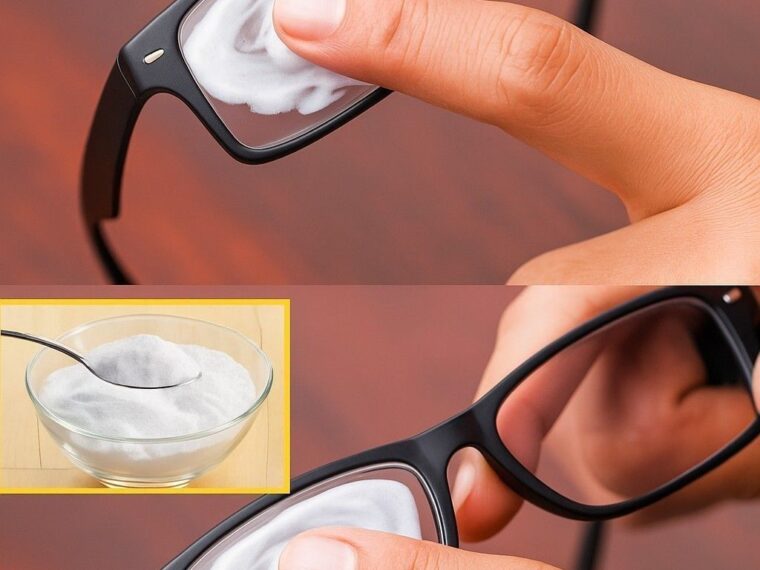
Baking Soda
Baking soda is also abrasive.
While it may polish some surfaces, it can damage coated lenses permanently.
Car Wax or Furniture Polish
Some people apply waxes temporarily to “fill” scratches visually.
However, these substances may:
- Smear vision
- Damage coatings
- Leave residue
Professional opticians generally discourage these methods for modern prescription lenses.
How to Prevent Future Scratches
Prevention matters far more than repair.
Use a Hard Glasses Case
Always store glasses inside a protective case when not in use.
Avoid placing them:
- Face-down on surfaces
- Loose inside bags
- In pockets without protection
Clean Correctly
Never wipe dry dusty lenses immediately.
Always rinse first.
Avoid Clothing as a Cleaning Cloth
Even soft-looking fabric may contain:
- Dust
- Fibers
- Dirt particles
that scratch lenses gradually.
Replace Old Microfiber Cloths
Dirty microfiber cloths can trap abrasive particles over time.
Wash them regularly without fabric softener.
When Professional Help Is Better
If scratches:
- Affect vision significantly
- Cause glare while driving
- Cover large areas
- Reach deep into the lens
professional replacement may be the safest solution.
Opticians can also inspect whether lens coatings are deteriorating rather than simply scratched.
Why Lens Coatings Matter
Modern lenses often include advanced coatings that improve:
- Glare reduction
- UV protection
- Scratch resistance
- Blue light filtering
These coatings are thin and delicate.
Aggressive polishing can permanently remove them, sometimes making lenses worse than before.
The Psychology of “Restoring” Objects
People naturally enjoy repairing everyday objects because it:
- Saves money
- Reduces waste
- Creates satisfaction
- Extends usefulness
That’s why DIY repair articles often become popular online.
However, with delicate optical products, gentle care usually works better than aggressive “miracle fixes.”
Final Thoughts
While deep scratches on glasses usually cannot be completely removed safely at home, proper cleaning methods can still improve clarity and reduce the appearance of minor surface marks.
Using:
- Warm water
- Mild soap
- A quality Microfiber cloth
remains one of the safest ways to maintain lenses and preserve their condition over time.
Sometimes the best way to keep glasses looking “new” is not through harsh repair tricks — but through careful daily maintenance and prevention.