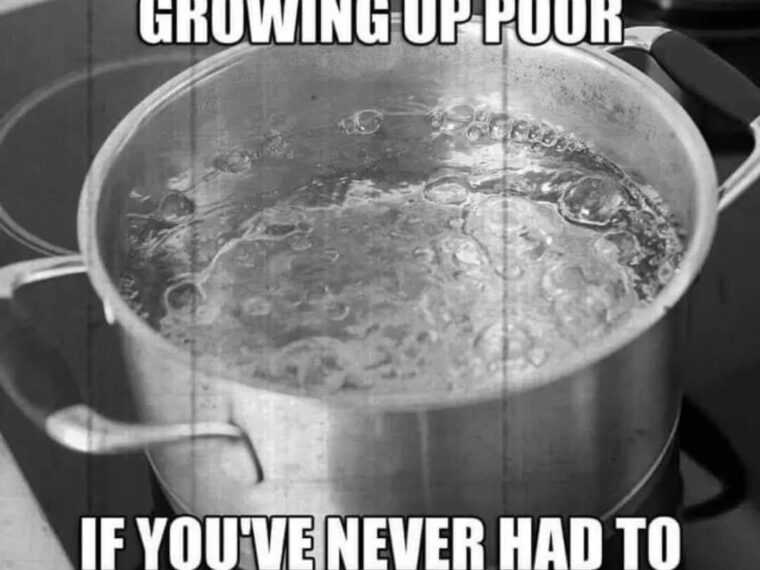
There are certain memories that don’t fade with time. They don’t soften or blur at the edges. They stay sharp, almost physical, like you could reach out and touch them. For me, one of those memories starts in a small kitchen, late at night, with a pot of water rattling on the stove.
If you’ve never boiled water just to take a bath, this might sound strange. Maybe even dramatic. But if you have, you already know exactly where this story is going.
Growing up poor isn’t always about not having food or clothes. Sometimes it’s about routines that feel normal when you’re living them, but later in life, you realize how heavy they were. Back then, boiling water wasn’t a symbol of hardship. It was just… what we did.
The house would be quiet. Too quiet. Usually because everyone was tired. The kind of tired that comes from long days, from worrying without saying it out loud. Someone would fill a big metal pot with water and set it on the stove. The flame would flicker underneath, and we’d wait. And wait.
Steam would slowly rise, fogging the air, making the kitchen feel warmer than the rest of the house. There was something comforting about that warmth, even if it came from necessity. When the water finally boiled, it wasn’t the end. It was just the beginning.
The Long Process Behind Something Simple
Bathing should be a simple thing. Turn on a faucet, adjust the temperature, and you’re done. But when you grow up in a house without reliable hot water, nothing is simple.
The boiling pot would be carefully carried from the stove to the bathroom. Sometimes more than one trip was needed. A little hot water in the tub or basin, then some cold water to balance it out. Too much hot water and you could burn yourself. Too much cold and the whole effort felt pointless.
It required patience and precision, especially when you were a child. You learned to test the water with your hand, slowly mixing until it felt just right.
Even then, the bath had to be quick. The water cooled fast. The warmth didn’t last long.
At the time, it didn’t feel unusual. It was routine. Just another small task in a house where many things took more effort than they should have.
The Quiet Lessons Poverty Teaches
Growing up poor teaches lessons that aren’t written anywhere. No one sits you down and explains them. You just absorb them.
You learn not to waste things. Not food. Not water. Not electricity. Every little thing has value.
Lights get turned off the moment you leave a room. Leftovers are saved carefully. Clothes are worn longer than they probably should be.
And when something breaks, replacing it isn’t the first option. Fixing it is.
Those habits stay with you long after life changes. Even when you can afford more comfort, part of your mind still measures every expense.
You still hesitate before throwing something away. You still feel guilty letting water run too long.
The Strange Mix of Normal and Difficult
One of the hardest things about childhood poverty is how normal it feels while you’re living through it.
Kids adapt quickly. If everyone around you lives the same way, you don’t question it much. You assume this is simply how life works.
You don’t realize the difference until you visit someone else’s home.
Maybe their shower has endless hot water. Maybe their kitchen is stocked with snacks that never seem to run out. Maybe their house feels warm in winter without everyone wearing extra layers.
Those moments can be confusing. You start to understand that the life you thought was normal is actually different.
But even then, many kids don’t complain. They just notice.
The Weight Parents Carry
Looking back as an adult, what stands out most isn’t the inconvenience of boiling water.
It’s the quiet effort behind it.
Someone had to fill that pot. Someone had to light the stove. Someone stayed up late to make sure everyone in the house could wash before bed.
Parents who struggle financially often carry a silent burden. They do everything they can to make life feel normal for their children.
They stretch money in ways that seem impossible. They skip things for themselves so their kids won’t notice the difference.
As children, we rarely see that full picture. Only later do we realize how much they were protecting us from.
Small Comforts in Hard Times
Even in difficult circumstances, there were small comforts.
The warmth of the kitchen while the water boiled.
The sound of family members talking quietly late at night.
The feeling of clean skin after finally finishing that carefully prepared bath.
Those moments mattered more than we understood at the time.
They created a sense of stability in a life that sometimes felt uncertain.
Poverty doesn’t erase love or warmth. In many cases, it makes those things even more important.
The Habits That Never Leave
Years pass. Life changes.
Maybe you move into a place with reliable hot water. Maybe you have a stable job. Maybe the worries that once filled the house slowly fade.
But some habits never leave.
You still take shorter showers than necessary.
You still feel a sense of relief when basic things work the way they should.
And sometimes, when you see steam rising from a pot on the stove, you remember those nights in the quiet kitchen.
Memory is strange like that. It attaches itself to small details.
Understanding Others Through Shared Experience
Stories like this resonate with many people because they are shared experiences.
Millions of families around the world have lived through similar moments—boiling water, stretching resources, doing whatever it takes to get through the day.
When people talk about growing up poor, they aren’t always talking about extreme hardship. Often, they’re talking about these everyday routines that required extra effort.
These stories create connection. They remind us that many people carry invisible memories from their childhood.
And they help others feel less alone.
The Strength Hidden in Those Memories
Next page