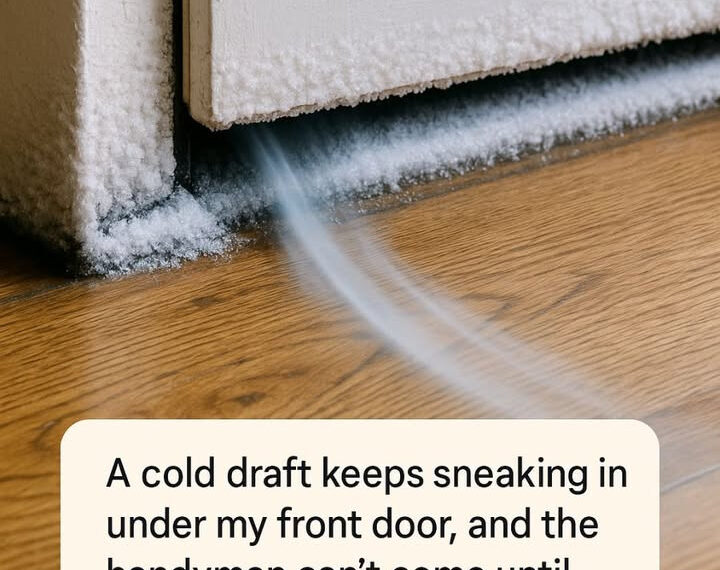
As winter sets in, the chill of the season can creep into your home in unexpected ways. One of the most common culprits is a cold draft sneaking in under the front door, leaving even well-heated rooms feeling uncomfortably chilly. The timing couldn’t be worse if your handyman can’t come until after the holidays, leaving you to brave the cold. Fortunately, there are several practical, quick, and cost-effective solutions you can implement immediately to block drafts and keep your home warm.
In this guide, we’ll walk you through step-by-step fixes, from using household items to small DIY projects, along with safety tips and creative hacks to make your home cozy until professional help arrives.
1. Detect the Source of the Draft
Before attempting any solution, it’s essential to confirm exactly where the cold air is coming in. Simply feeling around might not always be enough. Here’s how to pinpoint the problem:
- Hand test: Run your hand along the edges and bottom of the door to feel for cold air.
- Flame or smoke test: Use a lit candle or incense stick near the door seams. The flame flickers or smoke wavers where there is airflow.
- Measure the gap: Gaps larger than 1/4 inch allow noticeable drafts. Larger gaps may require more substantial fixes.
Understanding the size and location of the gap will guide which methods work best. For example, a thin 1/4-inch crack might only need weatherstripping, while a half-inch gap benefits from heavier barriers like towels or draft snakes.
2. Quick DIY: Roll Up a Towel or Blanket
The simplest and fastest way to block a draft is to roll up a towel or blanket and place it snugly against the bottom of the door.
How to do it:
- Choose a thick towel, small blanket, or even an old robe.
- Roll it tightly and ensure it spans the full width of the door.
- Position it at the base of the door, pushing it firmly against the floor.
- Optionally, secure the ends with rubber bands or string to prevent slipping.
This method is effective for gaps around 1/2 inch or larger and can be removed easily when the door needs to open. It’s a cheap, temporary solution that can make an immediate difference in warmth.
3. No-Sew DIY Draft Snake
For a more customizable and reusable solution, create a draft snake using old clothing:
Materials:
- Old socks, sleeves, or fabric tubes
- Rice, beans, or sand for weight
- Rubber bands or string
Instructions:
- Fill the fabric tube or sock with rice, beans, or sand until it’s heavy enough to stay in place.
- Tie both ends securely.
- Position the draft snake along the bottom of the door.
Draft snakes are durable, portable, and highly effective, making them perfect for frequent use during the winter months.
4. Apply Weatherstripping Tape
Weatherstripping is a semi-permanent fix that provides a tight seal against drafts:
Steps:
- Clean the door’s bottom and edges with a damp cloth to remove dust and debris.
- Cut the tape to match the door’s width.
- Apply firmly along the bottom, ensuring the seal contacts the floor when the door closes.
This method is excellent for smaller gaps or as a temporary barrier until a proper threshold or door sweep is installed. It’s inexpensive, widely available at hardware stores, and very effective.
5. Temporary Cardboard or Foam Barrier
If you don’t have towels, socks, or weatherstripping on hand, cardboard or foam can work as a quick solution:
- Cut a piece slightly taller than the gap under the door.
- Slide it snugly against the bottom edge of the door.
- Optionally, tape it lightly to prevent it from slipping.
While temporary, this method is surprisingly effective and can be done in a matter of minutes.
6. Rearrange Furniture or Rugs
Sometimes a simple placement of rugs or furniture near the door can reduce the cold air’s impact:
- Thick rugs can trap drafts before they spread into the room.
- A chair, bench, or small table positioned in front of the door can act as an additional barrier.
- If possible, place rugs along the hallway leading to the door for extra insulation.
This method won’t stop the draft completely but reduces the chilling effect until more permanent measures are in place.
7. Use Household Heat Strategically
While physical barriers block cold air, heat management can complement these fixes:
- Position small heaters safely near the door to create a warm air curtain.
- Close off unused rooms to focus warmth where you spend the most time.
- Heavy curtains or blankets on windows nearby prevent heat loss and improve overall comfort.
Strategic heat placement works well with draft snakes or towels to maximize warmth in the most affected areas.
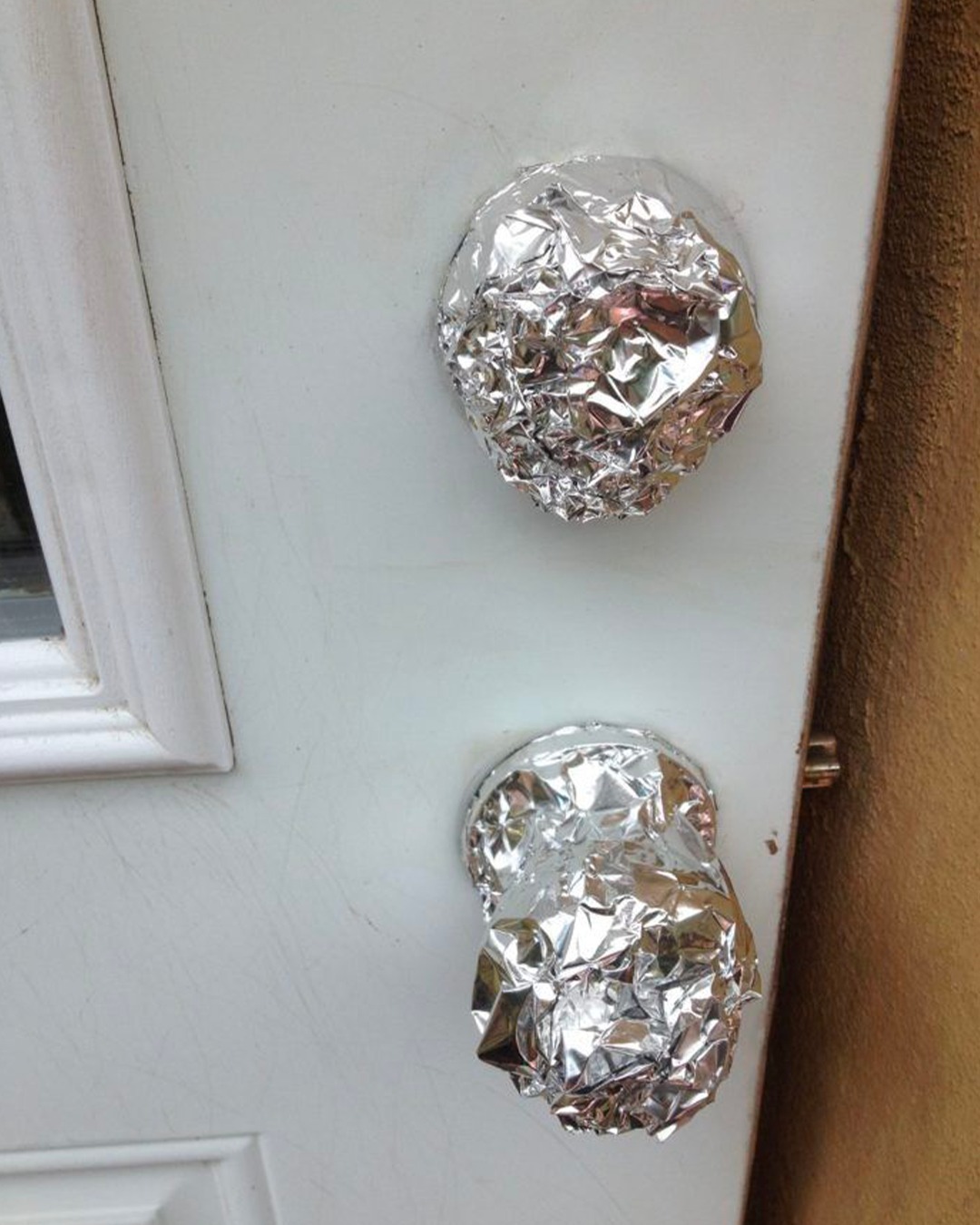
8. Reflect Heat with Aluminum Foil
Here’s a clever science-based hack:
- Roll a strip of aluminum foil and place it under the door gap, shiny side facing the room.
- The foil reflects heat from the floor or nearby heater back into the room.
Although small, this reflective effect can boost comfort slightly when combined with other draft-blocking methods.
9. Consider Door Sweeps or Thresholds
If the gap is significant and temporary solutions aren’t enough, installing a door sweep or threshold is highly effective:
- Door sweeps attach to the bottom of the door to create a seal against drafts.
- Thresholds raise the floor slightly to block incoming air.
- Both are inexpensive, easy to install, and provide long-term protection against cold air, dust, and insects.
Even if your handyman can’t come immediately, you can often purchase and install these yourself for a quick DIY solution.
10. Safety Tips
Next page