
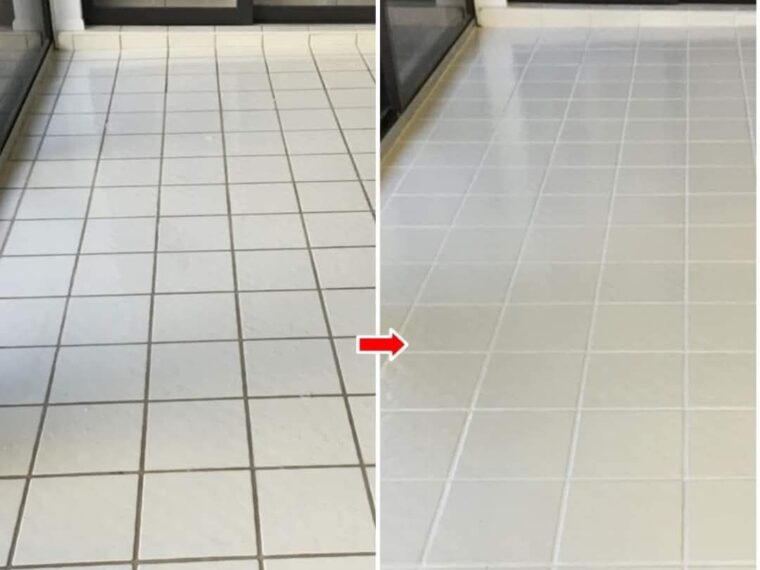
Cleaning floors may seem like a simple and routine task when it comes to everyday maintenance, but things change completely when you need to perform a deep cleaning. Regular sweeping or mopping removes surface dust and dirt, yet the true challenge lies in restoring the original appearance of the grout—the narrow lines between tiles that tend to collect grime over time. When grout becomes dark or even black, the entire floor looks aged, dull, and neglected, even if the tile itself is spotless.
Blackened grout is not only an aesthetic problem. These dark stains often indicate the buildup of grease, mold, mildew, soap residue, and bacteria. Grout is naturally porous, so it absorbs dirt easily. Over time, the accumulated residues settle deep within the tiny holes and cause discoloration. This is particularly visible when your tiles are white or light-colored, making the contrast even more noticeable.
Fortunately, it is absolutely possible to whiten floor grout naturally and with minimal effort. You do not need harsh chemical cleaners to restore the brightness of your floors. Below, you will find four of the most effective natural methods for removing black stains from grout, along with detailed instructions, tips, and best practices to achieve professional-level results at home.
Why Grout Turns Black
Before jumping into cleaning solutions, it helps to understand why grout becomes black in the first place. The most common causes include:
1. Moisture Accumulation
Bathrooms, kitchens, and entryways are prone to moisture, which creates the perfect environment for mold and mildew. These fungi thrive in damp areas and turn grout dark.
2. Soap Scum and Grease
In bathrooms, soap residue settles into grout lines. In kitchens, cooking oils and food spills gradually seep in and cause discoloration.
3. Dirt Buildup
High-traffic areas accumulate mud, dust, and shoe grime. Over weeks and months, this forms layers of dirt that darken grout.
4. Lack of Protective Sealer
Unsealed grout absorbs stains more easily. Without a protective sealant, even clean floors can develop dark grout quickly.
Understanding the cause helps you choose the most effective cleaning method and prevent the problem from coming back.
4 Natural Solutions to Remove Black Grout Stains
Below are the four most effective and eco-friendly solutions for whitening floor grout without using aggressive chemical products. These methods work for ceramic, porcelain, stoneware, and most tiled surfaces.
1. Baking Soda Paste
Baking soda is one of the most versatile and effective natural cleaning ingredients. When mixed with water, it forms a gentle abrasive paste that lifts stains, fights odors, and helps break down accumulated dirt.
Ingredients
- 3 tablespoons of baking soda
- Warm water
- A small bowl
- An old toothbrush or grout brush
Instructions
- Mix baking soda with just enough water to create a thick paste.
- Spread the paste generously along all the grout lines.
- Use a toothbrush to scrub the grout in circular motions.
- Leave the paste on for at least 15 minutes so it can penetrate the grime.
- Rinse thoroughly with warm water or mop the entire floor.
Why It Works
Baking soda is mildly alkaline and acts as a gentle abrasive. This allows it to remove embedded stains without damaging tile surfaces.
Extra Tip
For even stronger cleaning power, spray white vinegar over the baking soda paste. The fizzing reaction helps lift stubborn black stains.
2. White Vinegar Solution
White vinegar is another natural product known for its impressive cleaning properties. It disinfects, deodorizes, and dissolves mineral residues that often darken grout.
Ingredients
- 1 cup of white vinegar
- 1 cup of warm water
- A spray bottle
- A stiff-bristled brush
Instructions
- Mix equal parts vinegar and water in a spray bottle.
- Spray the solution generously onto the grout lines.
- Allow it to sit for 10–15 minutes.
- Scrub thoroughly with a brush.
- Rinse with clean water to remove any remaining vinegar scent.
Caution
Avoid using vinegar on natural stone tiles such as marble, limestone, or granite, as its acidity can damage them.
Why It Works
Vinegar breaks down soap scum, mold, and mineral buildup. It is especially effective in bathrooms, where moisture levels are high.
3. Hydrogen Peroxide and Baking Soda Mix
If your grout is deeply stained or has turned almost completely black, combining hydrogen peroxide with baking soda provides deeper, more powerful cleaning. This method is safe, effective, and ideal for medium to severe discoloration.
Ingredients
- 2 tablespoons of baking soda
- Hydrogen peroxide (3% solution)
- A bowl
- A brush
Instructions
Next page