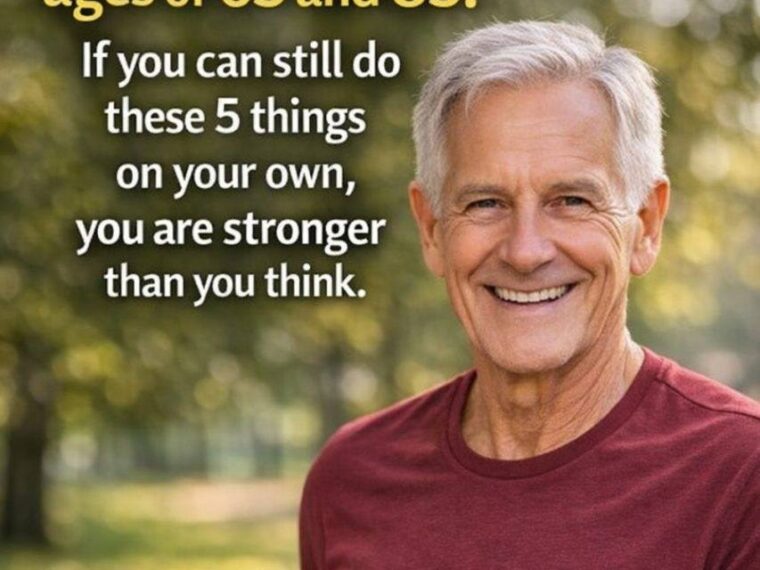
Emotional strength matters just as much as physical ability.
People who continue:
- Calling friends
- Maintaining relationships
- Participating socially
- Communicating openly
often demonstrate strong psychological resilience.
Social connection has been associated in many studies with:
- Better emotional health
- Reduced loneliness
- Lower depression risk
- Improved cognitive outcomes
Healthy aging is not only about the body surviving longer.
It is also about remaining emotionally connected to life and other people.
5. Adapting to Change and Continuing to Learn
One of the strongest signs of resilience at any age is adaptability.
Older adults who continue learning new things — whether technology, hobbies, routines, or skills — often maintain:
- Mental flexibility
- Curiosity
- Confidence
- Cognitive engagement
Adaptation becomes increasingly important because aging naturally involves life changes such as:
- Retirement
- Physical changes
- Loss
- Family transitions
- Evolving routines
The ability to keep adjusting emotionally and practically reflects deep inner strength.
Why Everyday Independence Matters So Much
People sometimes underestimate how complex ordinary daily activities truly are.
Tasks like:
- Walking safely
- Cooking
- Shopping
- Remembering appointments
- Staying socially connected
require coordination between multiple body systems and cognitive functions simultaneously.
That’s why preserving independence is considered one of the most meaningful markers of healthy aging.
Healthy Aging Is Not About Perfection
Importantly, strength in older adulthood does not mean:
- Never needing help
- Avoiding all physical limitations
- Constant productivity
Aging naturally changes the body over time.
Healthy aging is more realistically about:
- Adaptation
- Maintaining quality of life
- Preserving dignity
- Supporting independence where possible
Needing occasional help does not erase someone’s resilience or worth.
Emotional Strength Often Increases With Age
Research in psychology frequently finds that many older adults develop:
- Better emotional regulation
- Greater patience
- Improved perspective
- Reduced impulsiveness
Life experience often strengthens emotional resilience even when physical abilities change.
Many people become:
- More reflective
- More selective socially
- More appreciative of meaningful moments
with age.
The Importance of Movement
Physical movement remains one of the strongest contributors to healthy aging.
Even moderate activity such as:
- Walking
- Stretching
- Gardening
- Light strength exercises
may help support:
- Balance
- Muscle mass
- Circulation
- Joint mobility
- Cognitive health
Movement supports independence directly.
Why Society Sometimes Underestimates Older Adults
Modern culture often focuses heavily on youth, productivity, and speed.
As a result, older adults are sometimes unfairly viewed primarily through limitations rather than strengths.
Yet many people between 65 and 85 continue contributing through:
- Wisdom
- Experience
- Emotional support
- Adaptability
- Stability
- Caregiving
Aging does not erase capability.
Cognitive Health and Daily Life
Simple daily independence often reflects healthy cognitive functioning.
Tasks such as:
- Planning errands
- Following conversations
- Managing routines
- Learning new information
help keep the brain actively engaged.
Mental stimulation through real-life activity is considered important for long-term brain health.
Independence Also Supports Confidence
Being able to perform daily tasks independently often reinforces:
- Self-esteem
- Purpose
- Emotional stability
- Confidence
Losing independence can feel emotionally difficult partly because it affects identity as much as practicality.
That is why preserving autonomy compassionately matters so much in healthy aging.
Small Actions Can Reflect Big Strength
One important truth about aging is that strength often becomes quieter.
It may no longer appear through:
- Competition
- Speed
- Physical dominance
Instead, it appears through:
- Persistence
- Adaptability
- Emotional endurance
- Everyday resilience
Sometimes simply continuing to show up for daily life independently reflects tremendous strength.
Final Thoughts
Between 65 and 85, the ability to:
- Move independently
- Manage responsibilities
- Stay socially connected
- Adapt emotionally
- Continue engaging with life
often reflects far greater resilience than people realize.
Healthy aging is not defined by avoiding all change.
It is defined by continuing to live with dignity, purpose, adaptability, and self-awareness despite those changes.
And many older adults are far stronger — physically, mentally, and emotionally — than society often gives them credit for.