
Snake plants thrive in warm, cozy conditions. Aim to keep indoor temperatures between 60–75°F (16–24°C).
Cold drafts, sudden temperature fluctuations, or prolonged exposure to temperatures below 50°F (10°C) can stress the plant and prevent flowering. Place your snake plant in a stable environment away from air conditioners, drafty windows, and heating vents to keep it comfortable and productive.
4. Keep the Plant Slightly Root-Bound
Interestingly, snake plants tend to flower more readily when they are slightly root-bound. When the roots are confined, the plant experiences mild stress, which can trigger flowering.
However, there’s a fine balance:
- If the roots are bursting out of the pot, it’s time to repot to prevent damage.
- Slight confinement encourages blooms without causing harm.
This principle is similar to many flowering houseplants: a bit of stress stimulates reproduction.
5. Fertilize Sparingly
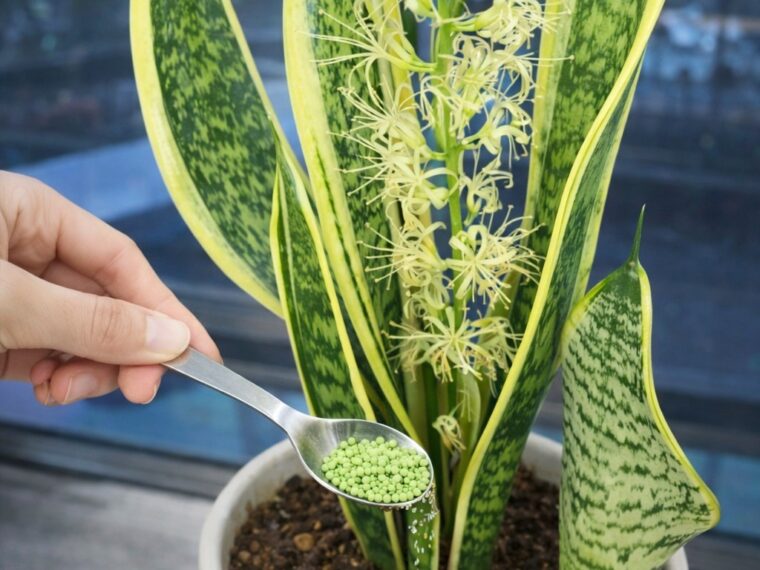
While fertilization supports growth, too much fertilizer can discourage flowering. Use a balanced houseplant fertilizer during the growing season (spring and summer), but apply sparingly. Over-fertilizing can lead to lush, green leaves at the expense of blooms.
Organic fertilizers like worm castings or diluted fish emulsion are also excellent choices, providing nutrients gradually without overwhelming the plant.
6. Be Patient
Snake plants often take several years to mature enough for flowering. Don’t be discouraged if your plant doesn’t bloom immediately. Proper care, time, and the right environment are key factors.
Sometimes flowering occurs sporadically, even in established plants. Treat each flowering event as a rare and exciting milestone in your plant’s life.
What Snake Plant Flowers Look Like
When your snake plant decides to bloom, it produces tall flower stalks, often rising up to three feet above the foliage. The flowers themselves:
- Are small and tubular, resembling tiny lilies or honeysuckle
- Appear in clusters at the top of the stalk
- Vary in color from white, cream, or pale green to yellowish hues
- Emit a sweet, powerful fragrance that can fill a room
The contrast of the delicate flowers against the bold, sword-like leaves makes flowering snake plants visually stunning. While the blooms are short-lived, the experience is unforgettable for indoor gardeners.
How Long Do Snake Plant Blooms Last?
Typically, snake plant flowers last about two to three weeks, depending on the variety and growing conditions. During this time:
- Keep an eye on pests attracted to the nectar
- Avoid moving the plant excessively, as disturbance can shorten bloom duration
The flowers may fade naturally, but the leaves will continue to grow normally, and the plant can potentially bloom again in the future.
Do Snake Plants Die After Flowering?
No. Despite being a significant energy investment, flowering does not kill the plant. After blooms fade:
- Remove the spent flower stalks
- Resume regular care, including proper watering, light, and occasional fertilization
A healthy snake plant can thrive for many years and may even surprise you with additional blooms in subsequent seasons.
Additional Tips to Encourage Flowering
- Repot Only When Necessary: Slight root confinement can promote blooms, so avoid frequent repotting. Only move the plant to a larger pot when absolutely required.
- Mulching: A thin layer of mulch can help maintain soil moisture and stabilize temperature, encouraging healthier growth.
- Rotate Your Plant: Occasionally rotate the plant for even light exposure, which keeps the leaves balanced and supports overall vitality.
- Stress Strategically: Mild, controlled stress like slight drought or limited root space can trigger flowering—but avoid extremes that damage the plant.
- Consistent Care: Flowers are a sign of a happy plant. Regular monitoring of water, light, and temperature is essential for ongoing health.
The Joy of Snake Plant Blooms
While the primary appeal of snake plants is their striking foliage and low maintenance, seeing one bloom adds an extra layer of beauty and excitement to your indoor garden. Flowering snake plants reward patience and attentive care with delicate, fragrant blossoms that are a delight to the senses.
With proper light, careful watering, balanced fertilization, and a little patience, your snake plant might just surprise you with a rare and spectacular bloom. Once it does, you’ll appreciate not only the flowers but the resilience and adaptability of this remarkable houseplant.
Whether you are a beginner or an experienced plant parent, nurturing your snake plant to bloom can become a rewarding project and a memorable moment of triumph in your indoor gardening journey.