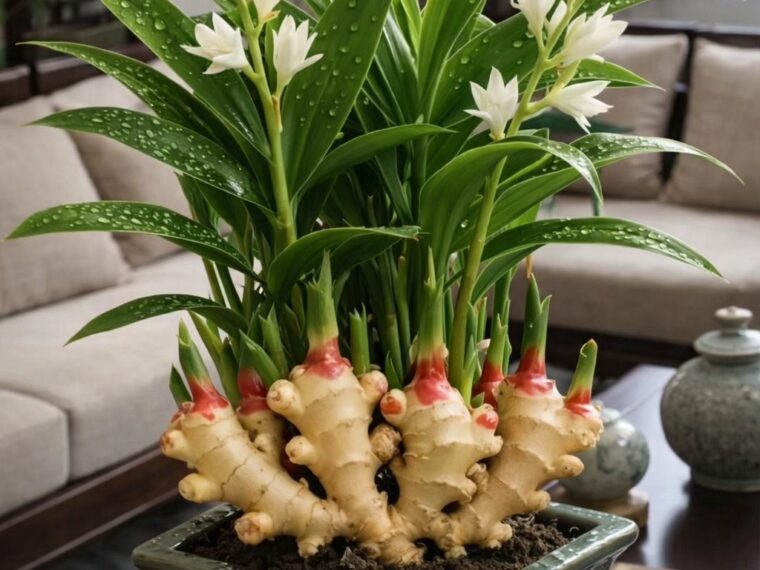
Ginger is a tropical plant, so it prefers warm temperatures between 75–85°F (24–29°C). It does not tolerate frost, so if you live in cooler climates, growing it in pots indoors or in a greenhouse is recommended.
Light requirements: Ginger thrives in bright, indirect sunlight. Direct sunlight, especially during the hottest part of the day, can scorch the leaves. Place your potted ginger near a window that gets filtered sunlight or in a location that receives morning sun and afternoon shade.
7. Fertilization
To encourage lush growth and robust rhizomes, feed your ginger regularly. A balanced liquid fertilizer every 2–4 weeks during the growing season provides the nutrients needed for healthy leaves and underground rhizomes.
Organic alternatives like worm castings, fish emulsion, or compost tea also work well and enrich the soil naturally. Avoid over-fertilizing with high nitrogen fertilizers, as this can lead to excessive leaf growth at the expense of rhizome development.
8. Container Maintenance
As your ginger plant matures, it may become root-bound, meaning the rhizomes fill up the pot and restrict further growth. In such cases, repotting is necessary every 2–3 years.
When repotting:
- Gently remove the plant from the pot
- Divide the rhizomes if needed
- Replant them in fresh, nutrient-rich soil
This process encourages continuous growth and prevents the plant from stagnating. It’s also an opportunity to propagate new plants from the divisions, giving you even more ginger for future harvests.
9. Harvesting Ginger
Ginger typically takes 8–10 months to reach maturity. Signs that your plant is ready for harvest include:
- Slower growth
- Yellowing and dying back of leaves
To harvest, carefully lift the plant from the pot and gently separate the rhizomes from the soil. For continuous growth, only cut off the outer rhizomes, leaving the central portion in the soil. This method allows the plant to regenerate and produce more rhizomes over time.
If you prefer smaller, tender ginger for fresh use, you can also harvest “baby” ginger after 4–6 months. Baby ginger has a milder taste and is less fibrous, making it ideal for teas and fresh cooking.
10. Storing Ginger
Proper storage extends the life of your harvest. Here are some practical methods:
- Room temperature: Keep whole, unpeeled rhizomes in a cool, dry place away from direct sunlight. They can last for several weeks.
- Refrigeration: Place whole, unpeeled ginger in a resealable plastic bag with the air pushed out. Store in the crisper drawer for up to one month.
- Freezing: For long-term storage, ginger can be peeled, chopped, or grated, and then stored in an airtight container or freezer bag. Frozen ginger retains its flavor and nutrients for up to six months.
Tip: Only peel ginger right before use to maintain freshness and prevent moisture loss.
Extra Tips for Endless Ginger Harvests
- Rotate Containers: Every 1–2 years, refresh your potting soil and inspect the rhizomes. Healthy soil ensures continuous production.
- Control Pests: Watch for aphids, spider mites, and fungal issues, especially when grown indoors. Neem oil or insecticidal soap can help.
- Mulching: A thin layer of organic mulch helps retain moisture and regulate soil temperature.
- Indoor Cultivation: In colder climates, ginger can be grown indoors year-round under grow lights.
- Companion Planting: If planting multiple herbs in pots, ginger does well with turmeric, lemongrass, or basil, which have similar care requirements.
By following these secrets, you can create a thriving potted ginger garden that produces fresh rhizomes year after year. The satisfaction of harvesting your own ginger, knowing it’s free from chemicals and fully organic, is unmatched. Plus, you’ll have a constant supply of this versatile, nutrient-rich root for cooking, teas, and natural remedies.
Growing ginger in pots is not only practical but also therapeutic. Watching the green shoots emerge, nurturing the plant, and eventually harvesting your own fresh ginger creates a connection to nature that is both rewarding and delicious.
With patience, proper care, and the right techniques, your potted ginger plants can provide endless harvests and become a staple in your home garden or balcony oasis. Start small, pay attention to the details, and you’ll be amazed at how productive these tropical plants can be in your own home.