Ginger is a staple in kitchens around the world, celebrated not only for its distinctive flavor but also for its incredible health benefits. This versatile root is rich in nutrients such as vitamin B6, magnesium, potassium, and antioxidants, and it has long been used to relieve nausea, reduce inflammation, and boost immunity. Beyond its medicinal uses, ginger can be prepared and enjoyed in countless ways: fresh, dried, powdered, pickled, candied, or even as extracts and essential oils.
While most people purchase ginger from supermarkets, growing your own ginger at home can be a rewarding and cost-effective venture. Even if you live in a small apartment with just a balcony or windowsill, cultivating ginger in pots is entirely feasible. With the right approach, you can enjoy a continuous supply of fresh ginger without the need for constant shopping trips. Here are ten essential secrets to ensure your potted ginger thrives and produces an abundant harvest.
1. Choose the Right Ginger Variety
The first step in successfully growing ginger in pots is selecting the right variety. Not all ginger plants are suited for container growth, and different types vary in flavor, texture, and ornamental appeal.
- Common Ginger (Zingiber officinale): This is the most widely grown variety and the one used in everyday cooking. It has a robust flavor and grows well in pots if given proper care.
- Baby Ginger: A tender, less fibrous variety, baby ginger is ideal for container gardening. Its mild flavor makes it perfect for fresh consumption and garnishing dishes.
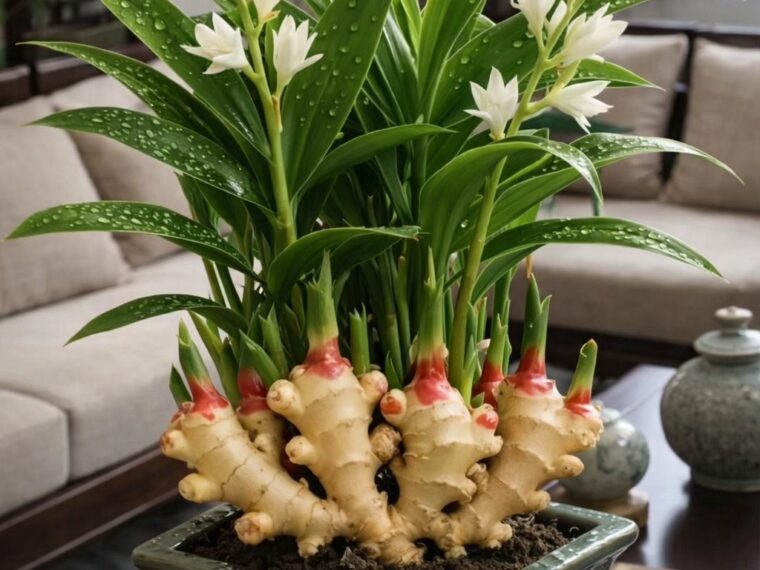
- Shell Ginger (Alpinia zerumbet): While not typically consumed, shell ginger is prized for its lush foliage and aromatic flowers. It can add an ornamental touch to your garden or balcony while still producing edible rhizomes in some cases.
When choosing a variety, consider your intended use, the space available, and the growth habit of the plant. If your goal is culinary use, common or baby ginger is your best bet.
2. Select a Suitable Container and Soil
Ginger’s shallow, spreading root system requires a wide and relatively deep pot. A container with a minimum depth of 12 inches (30 cm) is ideal, although wider is better to allow the rhizomes to expand naturally.
Drainage is crucial. Ginger roots are prone to rot if left in soggy soil, so ensure your pot has multiple drainage holes.
Soil mix: Use a well-draining, fertile potting mix enriched with organic matter. A combination of:
- Potting soil
- Compost
- Perlite or sand
…creates the perfect environment for healthy rhizome development. The soil should remain moist but not waterlogged, which brings us to watering.
3. Preparing Ginger Rhizomes
The quality of the ginger rhizome you start with has a direct impact on plant growth. Buy fresh, plump rhizomes from a reputable nursery or organic supplier. Look for pieces with visible “eyes” or growth buds, as these are where new shoots will emerge.
If your rhizome is large, you can divide it into smaller pieces. Each piece should have at least 2–3 eyes. Let the cut pieces dry for a few hours or overnight before planting to reduce the risk of rot. This simple preparation step ensures a healthier start and faster growth.
4. Planting
Planting ginger in pots is straightforward once your rhizomes are prepared. Place each piece with the eyes facing upward, about 2–4 inches (5–10 cm) deep in the soil.
Space multiple rhizomes about 6–8 inches (15–20 cm) apart to give each one room to grow. Cover them gently with soil and water lightly to settle the soil around the roots. Avoid compacting the soil too tightly, as ginger prefers loose, aerated soil that allows for easy expansion of the rhizomes.
5. Watering
Ginger thrives in a consistently moist environment. The soil should feel damp to the touch but never soggy, as excessive water can lead to root rot.
A practical tip is to water lightly every few days, adjusting depending on the climate and humidity. In dry conditions, misting the leaves occasionally can help maintain high humidity, which ginger loves. During rainy seasons or when indoors in humid areas, reduce watering slightly to prevent waterlogging.
6. Temperature and Light
Next page