
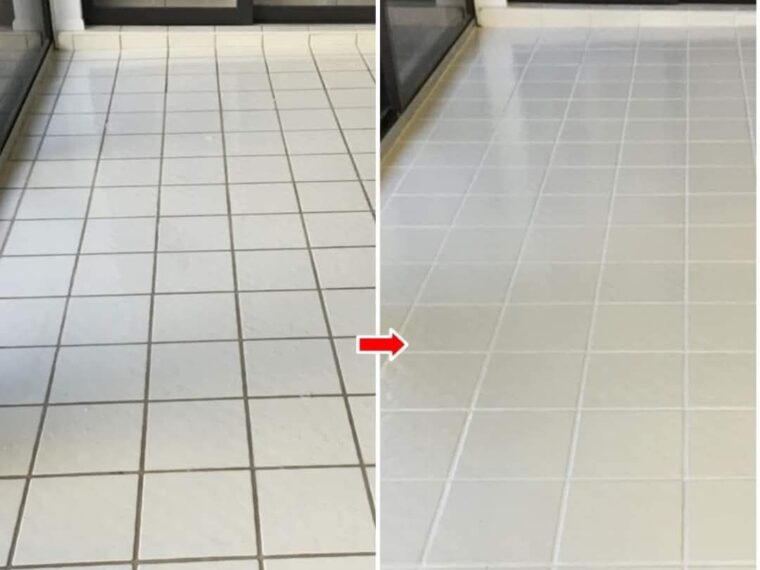
- Mix baking soda with hydrogen peroxide until you create a foamy paste.
- Apply a thick layer of the paste to the grout.
- Let it sit for 10–20 minutes.
- Scrub thoroughly.
- Rinse with warm water.
Why It Works
Hydrogen peroxide has whitening and disinfecting properties. When combined with baking soda, it penetrates deeply into grout pores and lifts dark, stubborn stains.
Extra Tip
Add a few drops of liquid dish soap to increase degreasing power, especially for kitchen floors.
4. Steam Cleaner Method
For those who prefer a completely chemical-free solution, steam cleaning is one of the most efficient ways to restore grout. High-temperature steam loosens dirt, kills bacteria, mold, and mildew, and dissolves greasy buildup.
What You Need
- A steam cleaner with a grout attachment
- Water (distilled if possible)
Instructions
- Fill the steamer with water and heat until it reaches full temperature.
- Attach the narrow grout cleaning nozzle.
- Run the steamer slowly along each grout line.
- Wipe away loosened dirt with a microfiber cloth.
- For extremely dirty grout, repeat the process.
Why It Works
Steam reaches temperatures high enough to sanitize surfaces instantly. It can penetrate grout better than most liquid cleaners.
Additional Tips for Maintaining White Grout
Cleaning grout once is only part of the solution. To keep the lines looking fresh and bright, regular maintenance is essential.
1. Always Dry the Floor After Cleaning
Humidity encourages mold growth. After mopping or showering, use a dry cloth or mop to remove excess water.
2. Avoid Harsh Chemicals
Bleach and ammonia may whiten grout temporarily but weaken it over time and create toxic fumes.
3. Seal the Grout
Apply a grout sealer once or twice a year. Sealers create a protective barrier that prevents moisture and dirt from penetrating.
4. Clean Spills Immediately
Splatters from food, coffee, wine, or oils can stain grout if left too long.
5. Regular Weekly Cleaning
Use a mild detergent and warm water to maintain cleanliness. A weekly routine prevents buildup.
When to Consider Regrouting
Sometimes grout is too damaged or stained for cleaning to be effective. You may need to replace it if:
- The grout is cracked or crumbling.
- Dark stains remain after multiple deep-cleaning attempts.
- Mold has penetrated too deeply.
- Tiles feel loose because the grout is deteriorating.
Regrouting is a more involved process but can transform the appearance of old floors completely.
Conclusion
Blackened grout can make even the cleanest home look neglected, but with the right natural cleaning methods, you can restore its original color without harsh chemicals or expensive products. Baking soda, vinegar, hydrogen peroxide, and steam cleaning all offer effective, affordable, and eco-friendly ways to remove dirt, mold, and stains from grout lines.
Regular maintenance and proper sealing will keep your floors looking fresh and bright for years to come. With a little effort and the right techniques, spotless, white grout is entirely within reach—even for heavily used spaces like kitchens and bathrooms.