
Cleaning is not just about aesthetics; it’s a crucial part of maintaining a healthy living environment. Regular cleaning helps prevent the buildup of dust, allergens, and germs that can lead to health issues. Understanding the right frequency for cleaning different areas of your home ensures that you maintain a space that is not only clean but also safe for you and your family. By establishing a consistent cleaning schedule, you can minimize the spread of bacteria and viruses, reduce allergy symptoms, and prolong the life of your household items.
Common Misconceptions About Cleaning
Many people believe that cleaning is a once-a-week chore, but this is a misconception. Different areas of the home require different cleaning frequencies based on their usage and exposure to dirt and germs. For instance, while some areas like kitchen counters need daily attention, others like windows can be cleaned less frequently. Understanding these differences can help you allocate your time and resources more effectively, ensuring that your home remains clean without unnecessary effort.
It’s easy to fall into the trap of over-cleaning in some areas while neglecting others. For instance, people often scrub down their kitchen counters daily but may forget about the bathroom sink until it’s visibly dirty. However, the bacteria in high-touch areas like the bathroom faucet or the kitchen cutting board might have a much higher potential for spreading illness than the dust that accumulates on a shelf.
Why Most People Get Cleaning Frequency Wrong
The main reason people get cleaning frequency wrong is a lack of awareness about how quickly dirt and germs can accumulate. Busy lifestyles often lead to neglecting cleaning tasks, or people may underestimate the importance of regular cleaning. Additionally, some may not realize the health implications of infrequent cleaning, such as increased allergy symptoms or the spread of illnesses. By educating yourself on the proper cleaning schedules, you can avoid these pitfalls.
For instance, did you know that door handles can harbor thousands of bacteria? When this is not factored into a regular cleaning routine, you might be inadvertently contributing to a cycle of illness in your home. The goal is to stay ahead of the buildup before it becomes a bigger problem.
The Impact of Incorrect Cleaning Practices
Incorrect cleaning practices can lead to a variety of problems, including the spread of germs, unpleasant odors, and even damage to household items. For example, neglecting to clean the refrigerator regularly can lead to food spoilage and odors, while not cleaning the bathroom frequently enough can result in mold growth. These issues not only affect the cleanliness of your home but can also have financial implications, as they may lead to costly repairs or replacements.
Consider the bathroom sink: if it is not cleaned regularly, the buildup of soap scum and toothpaste residue can become stubborn and difficult to remove over time. What might have been a simple task becomes a larger, more time-consuming chore, simply because regular maintenance was neglected.
Guide to Cleaning Frequency for the Most Used Areas of Your House
To maintain a clean and healthy home, it’s important to understand the specific cleaning needs of different areas. This guide provides a detailed breakdown of how often you should clean the most used areas of your house, ensuring that you keep germs at bay and maintain a pleasant living environment.
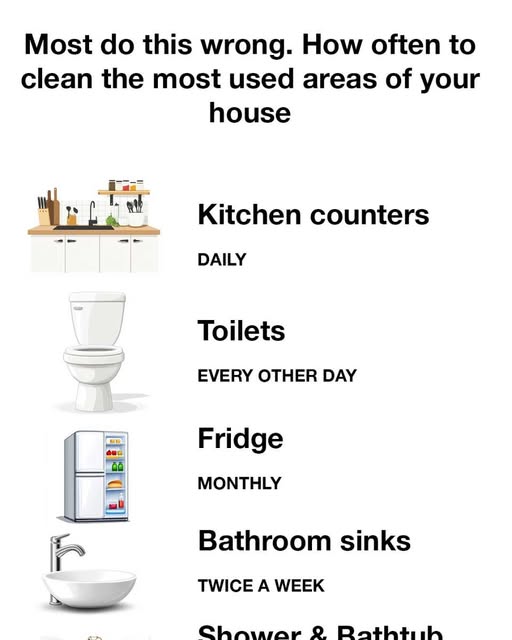
1. Kitchen Counters: Daily Maintenance for Hygiene
Kitchen counters are a hotspot for bacteria due to their constant use for food preparation. Wiping them down daily with a disinfectant helps prevent the spread of germs and keeps your kitchen hygienic. Pay special attention to areas where raw meat is prepared to avoid cross-contamination.
Daily cleaning ensures that harmful bacteria like E. coli or Salmonella, often found on surfaces where raw food is prepared, do not spread to other areas or linger long enough to pose a health risk. It only takes a minute or two and is far less time-consuming than letting germs accumulate and then needing a deep clean.
2. Bathroom Sinks: Twice a Week for Germ Control
Bathroom sinks can quickly become breeding grounds for bacteria due to the moisture and frequent use. Cleaning them twice a week with a disinfectant cleaner will help control germs and prevent the buildup of soap scum and toothpaste residue.
Regular maintenance keeps your bathroom smelling fresh and prevents the growth of harmful bacteria, ensuring that your family remains healthy and safe. The bathroom is one of the places in the house where germs tend to spread quickly, making frequent cleaning crucial.
3. Toilets: Every Other Day for Sanitation
Toilets should be cleaned every other day to maintain sanitation and prevent the buildup of bacteria and odors. Use a toilet cleaner and brush to scrub the bowl, and don’t forget to wipe down the seat and handle with a disinfectant.
Toilets, by nature, are subject to constant exposure to germs. The surfaces that you touch can easily transfer harmful bacteria to your hands. Regular cleaning keeps odors at bay and ensures the bathroom remains sanitary.
4. Shower and Bathtub: Weekly to Prevent Mold
Showers and bathtubs are prone to mold and mildew due to the damp environment. Cleaning them weekly with a mold and mildew remover will help keep them sparkling and prevent health issues related to mold exposure.
Water left behind in these areas creates the perfect environment for mold to grow, especially in warm, humid conditions. A quick weekly wipe-down prevents buildup, keeps your shower looking pristine, and stops the spread of mold spores.
5. Refrigerator: Monthly to Avoid Spoilage
A monthly deep clean of your refrigerator helps prevent food spoilage and odors. Remove all items, wipe down shelves and drawers with a mild cleaner, and check for expired products. This practice not only keeps your fridge clean but also helps you stay organized.
Many people overlook cleaning their fridge until it starts to smell, but regular maintenance helps extend the life of your food and avoid unpleasant surprises like expired produce or spilled liquids.
6. Oven and Stove: After Each Use to Prevent Buildup
Cleaning your oven and stove after each use prevents grease and food residue buildup, which can be difficult to remove if left for too long. A quick wipe with a damp cloth and a mild cleaner will keep these appliances in top condition.
Food spills in the oven can harden and burn onto the surface if left for long periods, causing smoke, bad smells, and difficulty removing stains. A simple, daily wipe-down can prevent all of these issues.
7. Floors: Weekly for High-Traffic Areas
High-traffic areas like entryways and hallways should be vacuumed or mopped weekly to remove dirt and debris. This not only keeps your floors clean but also extends their lifespan by preventing scratches and wear.
Frequent cleaning also helps prevent dirt from accumulating in carpet fibers or getting embedded into wooden floors, reducing the risk of long-term damage.
8. Carpets: Every Three Months for Deep Cleaning
Carpets should be deep cleaned every three months to remove embedded dirt and allergens. This can be done with a steam cleaner or by hiring a professional service. Regular deep cleaning helps maintain the appearance and longevity of your carpets.
Over time, dust, pet dander, and dirt can settle deep into your carpet fibers, where regular vacuuming can’t reach. Periodic deep cleaning removes these particles and helps keep your home’s air clean.
9. Windows: Quarterly for Clear Views
Cleaning windows quarterly ensures that they remain clear and free of streaks. Use a glass cleaner and a microfiber cloth to remove dust and fingerprints, allowing more natural light into your home.
Windows are often forgotten in the cleaning routine but cleaning them regularly helps maintain a bright, clear environment. It also prevents the buildup of grime and mineral deposits from rainwater.
10. Light Fixtures: Biannually to Remove Dust
Dust can accumulate on light fixtures, affecting their brightness and appearance. Cleaning them biannually with a duster or a damp cloth will keep them looking their best and ensure optimal lighting.
Light fixtures attract dust and grime, which can diminish the effectiveness of lighting. Regular cleaning of your fixtures ensures they remain bright and functional.
11. Door Handles: Daily for Germ Prevention
Door handles are touched frequently and can harbor germs. Wiping them down daily with a disinfectant will help prevent the spread of bacteria and viruses, especially during cold and flu season.
Door handles are among the most commonly touched items in your home, so regular cleaning of these high-touch areas is essential for reducing the spread of illness.
12. Remote Controls: Weekly for Hygiene
Remote controls are often overlooked but can be a hotspot for germs. Cleaning them weekly with a disinfectant wipe will help maintain hygiene, especially in households with multiple users.
Frequent cleaning ensures that your remotes remain germ-free and helps reduce the potential for the spread of bacteria, particularly in households where multiple people use them.
13. Computer Keyboards: Weekly to Remove Bacteria
Computer keyboards can harbor bacteria and dust. Cleaning them weekly with a can of compressed air and a disinfectant wipe will help keep them sanitary and functioning properly.
Keyboards, like remote controls, are often touched frequently and can carry bacteria. Regular cleaning helps improve their lifespan and function.
14. Bedding: Weekly for Freshness
Washing bedding weekly helps remove dust mites, sweat, and skin cells, ensuring a fresh and clean sleeping environment. Use hot water to kill any lingering bacteria and allergens.
Bedding often harbors allergens, bacteria, and dust mites. A weekly wash ensures that your sleeping environment remains clean and free from potential health issues.
15. Curtains and Blinds: Every Six Months for Dust Control
Curtains and blinds can accumulate dust and allergens. Cleaning them every six months with a vacuum attachment or by washing (if fabric allows) will help maintain air quality and appearance.
These soft furnishings may be easy to overlook, but they can trap dust, which affects the air quality in your home.
16. Trash Cans: Weekly to Prevent Odors
Trash cans should be cleaned weekly to prevent odors and bacteria buildup. Use a disinfectant spray or wipe to clean the inside and outside, and ensure that liners are replaced regularly.
Regular cleaning of trash bins prevents unpleasant odors and the growth of bacteria, helping to maintain a sanitary home environment.
17. Dishwashers: Monthly to Ensure Efficiency
A monthly clean of your dishwasher helps remove food particles and mineral buildup, ensuring it runs efficiently. Use a dishwasher cleaner or a cup of vinegar on an empty cycle to keep it fresh.
Dishwashers can accumulate grime and minerals that can affect their performance. A monthly clean ensures that they continue to work optimally.
18. Washing Machines: Monthly to Prevent Mildew
Washing machines can develop mildew and odors if not cleaned regularly. Running an empty cycle with hot water and vinegar or a washing machine cleaner once a month will help prevent these issues.
Like dishwashers, washing machines need regular cleaning to prevent mildew and maintain their efficiency.
19. Air Vents: Quarterly for Air Quality
Air vents can collect dust and allergens, affecting air quality. Cleaning them quarterly with a vacuum or a damp cloth will help maintain a healthy indoor environment and improve HVAC efficiency.
Regular cleaning of air vents ensures better airflow and can help prevent dust allergies.
20. Ceiling Fans: Seasonally to Remove Dust
Ceiling fans can accumulate dust, which is then circulated throughout the room. Cleaning them seasonally with a duster or a damp cloth will help maintain air quality and prevent dust buildup.
Dusty ceiling fans can circulate allergens throughout your living spaces. Seasonal cleaning helps maintain a cleaner, fresher environment.
Conclusion: Establishing a Cleaning Routine for a Healthier Home
Establishing a regular cleaning routine tailored to the specific needs of different areas in your home is key to maintaining a clean and healthy environment. By following the recommended cleaning frequencies, you can ensure that your home remains a safe and pleasant place for you and your family. Consistency is crucial, and by incorporating these tasks into your regular schedule, you can prevent the buildup of dirt and germs, ultimately leading to a healthier and more comfortable living space.
