
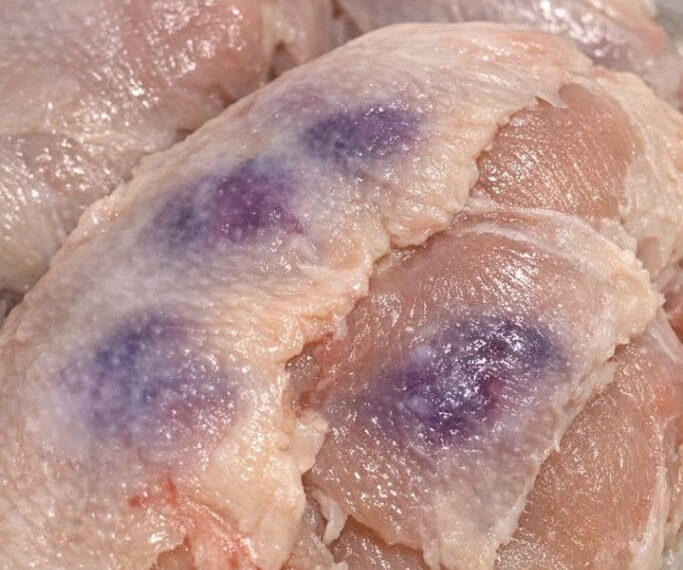
There’s a moment of hesitation that almost every home cook has experienced: you pull thawed chicken breasts from the fridge, peel back the packaging, and notice strange purple blotches lurking beneath the skin. The chicken doesn’t necessarily smell bad, but the color alone is enough to make you pause. When poultry looks “off,” it triggers a natural concern—and for good reason.
This situation can be especially confusing when the chicken was previously frozen and looked perfectly normal before thawing. Suddenly, dark purple or reddish patches appear, and you’re left wondering whether this is a harmless change or a serious food safety issue.
Because poultry is often associated with foodborne illnesses, it’s essential to understand what you’re seeing before deciding to cook or discard it. This article breaks down why purple blotches appear on thawed chicken, how to tell the difference between harmless discoloration and true spoilage, and when it’s safe to proceed—or safer to toss it.
Why Discoloration on Chicken Is So Alarming
Color is one of the first things people use to judge food safety. Bright pink chicken looks fresh; gray or greenish hues raise instant red flags. Purple blotches fall somewhere in between, which is why they cause so much uncertainty.
Unlike fruits or vegetables, poultry doesn’t have a wide range of “normal” colors in the average cook’s mind. When something unexpected shows up, it’s easy to assume the worst. However, not all discoloration means danger—especially when freezing and thawing are involved.
1. What Those Purple Blotches on Thawed Chicken Really Are
Purple or dark blotches under the skin of thawed chicken are often caused by natural pigments in the muscle, primarily myoglobin. Myoglobin is a protein responsible for storing oxygen in muscle tissue, and it plays a major role in meat color.
When chicken is frozen, ice crystals form within the muscle fibers. As the chicken thaws, those crystals damage cell walls, allowing myoglobin and other pigments to redistribute. This can result in darker patches that were not visible before freezing.
This process is similar to what happens when beef changes from bright red to a darker brown as it ages—oxygen exposure alters the pigment, not the safety of the meat.
Several factors influence how noticeable these blotches become:
- The age of the chicken
- The muscle type (breast vs. thigh)
- How quickly it was frozen
- How slowly or unevenly it was thawed
While chicken breasts typically contain less myoglobin than darker cuts, freezing can still cause visible pigment pooling under the skin.
2. Bone Marrow Leakage: The Most Common Cause
One of the most frequent and harmless explanations for purple blotches is bone marrow leakage.
During freezing, expanding ice crystals can puncture the porous bones of chicken—especially in younger birds. As a result, marrow and blood pigments seep into the surrounding meat. When the chicken thaws, this pigment spreads and becomes more visible, often appearing as purplish, reddish, or dark patches beneath the skin.
This phenomenon is particularly common in:
- Frozen chicken breasts with bone-in portions
- Young chickens with softer bones
- Chicken that was frozen slowly rather than flash-frozen
Although it may look unsettling, bone marrow leakage does not make chicken unsafe to eat and does not affect flavor or texture once cooked thoroughly.
3. Why Freezing Makes Discoloration More Noticeable
Freezing doesn’t cause spoilage, but it does change meat structure. The freezing and thawing cycle can:
- Break down muscle fibers
- Release trapped pigments
- Concentrate color in certain areas
This is why chicken that looked fine before freezing can appear discolored afterward. In many cases, the color evens out or fades during cooking.
It’s also worth noting that lighting plays tricks on the eye—purplish tones often look darker against pale raw chicken skin, making them seem more dramatic than they actually are.
4. How to Tell Normal Purple Patches From True Spoilage
The most important rule when judging chicken safety is this: color alone is not a reliable indicator. Instead, you should evaluate the chicken using multiple sensory cues.
Signs the Chicken Is Likely Safe:
- No sour, rotten, or sulfur-like odor
- Firm, slightly moist texture (not slimy)
- Discoloration is localized, not spreading
- Packaging was intact and properly stored
Signs the Chicken Has Spoiled:
- Strong sour or “eggy” smell
- Sticky, tacky, or slimy surface even after rinsing
- Gray, green, or yellowish hues
- Excessive gas or bloating in the package
If the purple blotches appear alongside a bad smell or slimy texture, the chicken should be discarded immediately.
5. The Smell Test: Your Most Reliable Tool
Your nose is often more trustworthy than your eyes. Fresh chicken has either no smell at all or a very mild, neutral scent. Spoiled chicken, on the other hand, develops a strong odor due to bacterial growth.
If you open the package and immediately recoil, that’s a clear sign the chicken is unsafe—regardless of color.
6. Texture Matters More Than Appearance
Run your fingers lightly over the chicken (or use gloves). Fresh chicken should feel:
- Slightly moist
- Smooth
- Firm to the touch
If the surface feels slimy, sticky, or excessively slick—even after rinsing—this indicates spoilage caused by bacterial activity.
7. Is It Safe to Cook Chicken With Purple Blotches?
If all other indicators suggest freshness, then yes—chicken with purple blotches caused by myoglobin or bone marrow leakage is safe to cook.
However, proper cooking is essential. Poultry must be cooked to an internal temperature of 165°F (74°C) to kill harmful bacteria such as Salmonella and Campylobacter.
Using a food thermometer is the most reliable way to ensure safety, especially when cooking chicken that looks unusual.
8. Will Cooking Remove the Discoloration?
In many cases, yes. As chicken cooks, heat denatures proteins and alters pigments, often causing purple or reddish areas to turn grayish-white or brown. Bone marrow stains may darken slightly but become far less noticeable.
The taste and texture of properly cooked chicken are not affected by these harmless discolorations.
9. When You Should Absolutely Throw It Out
Discard the chicken if:
- It smells bad, even slightly
- The texture is slimy or sticky
- It was thawed at room temperature for too long
- It has been in the fridge longer than 1–2 days after thawing
- You’re unsure how long it was previously stored
When in doubt, food safety always comes before avoiding waste.
10. How to Prevent This From Happening in the Future
While you can’t always prevent discoloration, you can reduce its likelihood:
- Freeze chicken quickly rather than slowly
- Thaw chicken in the refrigerator, not on the counter
- Use vacuum-sealed packaging when possible
- Buy high-quality, well-processed poultry
Proper handling minimizes cell damage and pigment migration.
Final Verdict: Cook or Toss?
Purple blotches under the skin of thawed chicken are usually harmless, especially when caused by myoglobin changes or bone marrow leakage. If the chicken smells fresh, feels normal, and has been stored correctly, it is safe to cook thoroughly and enjoy.
However, if discoloration is accompanied by odor, slime, or any other spoilage signs, the safest choice is to throw it out.
Trust your senses, follow proper cooking temperatures, and you’ll protect both your health and your peace of mind—without wasting perfectly good food. 🍗