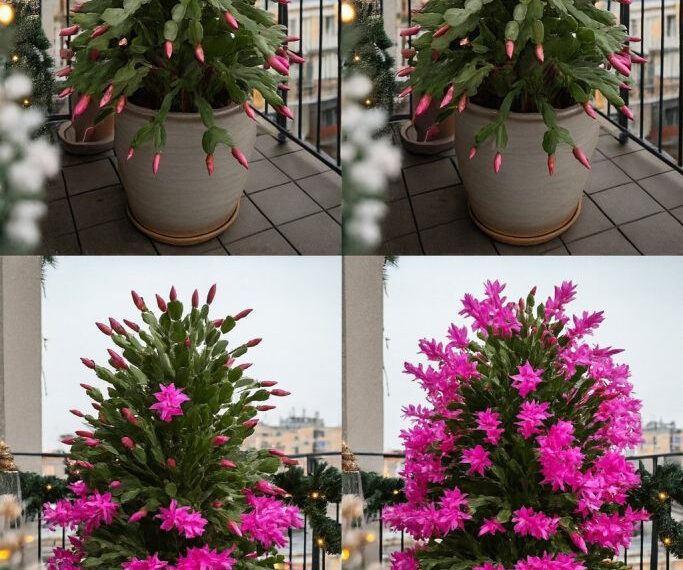
Few indoor plants frustrate gardeners as much as the Christmas Cactus (Schlumbergera). Its lush, segmented stems and vibrant blooms promise winter color, yet coaxing it to flower on schedule can feel like decoding a botanical puzzle. Many enthusiasts see buds that wither too soon or fail to appear entirely, leading to disappointment despite attentive care.
The secret to stunning blooms isn’t complicated—it’s about understanding the plant’s native environment and mimicking those conditions. With a few strategic adjustments, even a novice can enjoy a cascading display of flowers during the holiday season.
I. The True Nature of the Christmas Cactus
Although commonly lumped in with succulents, the Christmas cactus is actually a tropical epiphyte, not a desert dweller. In its natural Brazilian rainforest habitat, it grows on tree branches and rocky outcroppings, thriving in filtered sunlight and humid air. This environment is very different from that of the desert cactus, which explains why traditional succulent care often fails to trigger blooms.
Understanding this tropical heritage is key: it prefers stable, mild temperatures, moderate humidity, and indirect sunlight. If you provide these conditions, your Christmas cactus can bloom reliably, producing vibrant flowers in shades of red, pink, orange, and white.
II. Light and Temperature Needs
Light
- Bright, indirect light is essential.
- Avoid harsh, direct sunlight—it can scorch the leaf segments, leaving brown tips.
- South-facing windows with sheer curtains are ideal, or bright rooms without direct rays.
Temperature
- Ideal range: 15–23°C (59–73°F).
- Cooler nights (around 12–15°C / 54–59°F) can actually encourage bud formation, mimicking the plant’s natural seasonal cues.
- Keep away from drafts or sudden temperature changes, as this can cause flower buds to drop prematurely.
Outdoor Care
- During mild summers, the plant can thrive outdoors in filtered light.
- Always return it indoors well before frost, ideally when nighttime temperatures approach 10°C (50°F).
III. Watering and Humidity
Unlike desert succulents, Christmas cacti prefer consistent moisture but hate soggy soil.
- Watering: Allow the top inch of soil to dry between waterings. Overwatering can lead to root rot; underwatering can stress the plant and inhibit flowering.
- Humidity: Moderate humidity (40–60%) helps replicate rainforest conditions. If your home is dry, consider a shallow tray of water near the plant or occasional misting.
IV. The Trick to Flowering: Light and Temperature Manipulation
The key to coaxing blooms lies in short-day exposure, which tells the cactus that winter is approaching.
- Reduce light exposure to 10–12 hours per day for 6–8 weeks in the early fall.
- Maintain cooler temperatures at night (12–15°C / 54–59°F) to signal seasonal change.
- Avoid moving the plant frequently—Christmas cacti dislike sudden disturbances during bud formation.
With patience and the right environmental cues, flower buds will start forming, eventually leading to the signature winter blooms that make this plant so beloved.
V. Soil and Fertilization
Next page