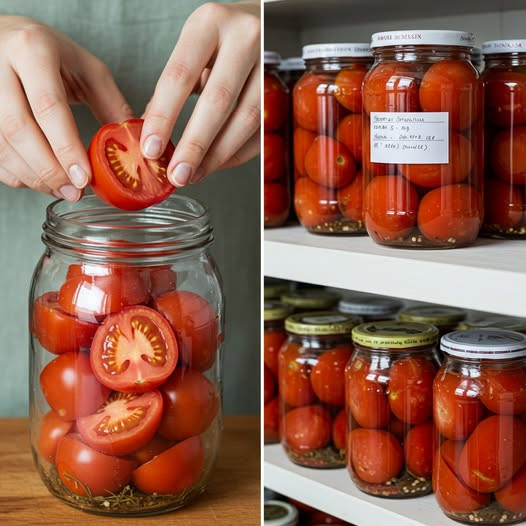
Place the sealed jars in a large pot lined with a cloth (to prevent breakage). Fill the pot with water until the jars are fully submerged.
Bring the water to a boil and let the jars process for about 40–60 minutes, depending on their size.
This step:
- Kills harmful microorganisms
- Creates a vacuum seal inside the jars
6. Cooling and Storage
After processing, carefully remove the jars and let them cool at room temperature.
As they cool, you may hear a “pop” sound—this indicates that the vacuum seal has formed successfully.
Check each lid:
- If it doesn’t move when pressed, the jar is properly sealed
- If it pops, the seal failed and the jar should be refrigerated and used quickly
Store sealed jars in a cool, dark place such as a pantry or cellar.
How Long Do They Last?
When properly prepared and stored, these preserved tomatoes can last up to two years without losing their flavor or quality.
However, always check before use:
- Look for signs of spoilage (mold, unusual smell, or gas buildup)
- If anything seems off, discard the jar immediately
Tips for Best Results
To maximize the quality and longevity of your preserves, keep these tips in mind:
- Use high-quality jars: Invest in durable, airtight jars designed for canning
- Avoid contamination: Always use clean utensils when handling tomatoes
- Label your jars: Write the date of preparation to track storage time
- Store properly: Keep jars away from heat, light, and humidity
Consistency and cleanliness are key to success.
Creative Ways to Use Preserved Tomatoes
Once you have your homemade tomato preserves, the possibilities are endless.
Here are some ideas:
- Homemade pasta sauce: Add garlic, olive oil, and herbs
- Soups and stews: Enhance depth of flavor
- Pizza base: Spread directly onto dough
- Shakshouka: Cook with eggs and spices
- Casseroles: Add richness and moisture
These tomatoes will bring a fresh, summery taste to your dishes—even in the coldest months.
Common Mistakes to Avoid
Even though the method is simple, a few mistakes can compromise your results:
- Skipping sterilization: This can lead to spoilage or health risks
- Overfilling jars: Leaves no room for expansion and proper sealing
- Loose lids: Air can enter and ruin the contents
- Insufficient processing time: May not eliminate all bacteria
Pay attention to each step to ensure safe and long-lasting preservation.
Final Thoughts
Preserving fresh tomatoes without vinegar is not only possible—it’s surprisingly easy when you follow the right method. By focusing on cleanliness, proper sealing, and heat processing, you can enjoy the natural taste of tomatoes for up to two years.
This technique allows you to make the most of seasonal produce, reduce waste, and elevate your cooking with homemade ingredients. Whether you’re preparing a comforting winter soup or a quick pasta dish, having jars of fresh-tasting tomatoes on hand is a true kitchen luxury.
So next time you find yourself with an abundance of ripe tomatoes, don’t let them go to waste. Turn them into long-lasting preserves and savor the flavor of summer all year round.