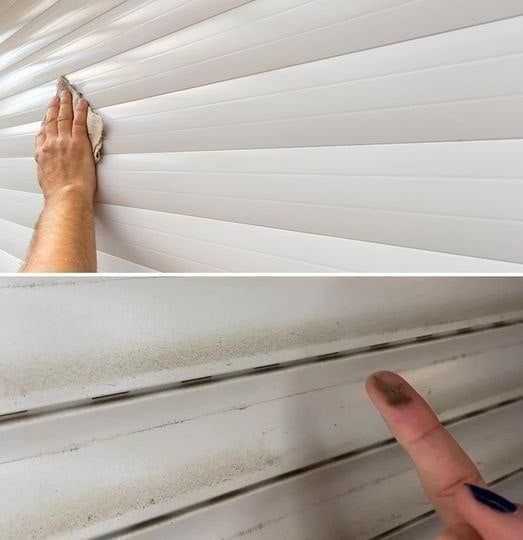
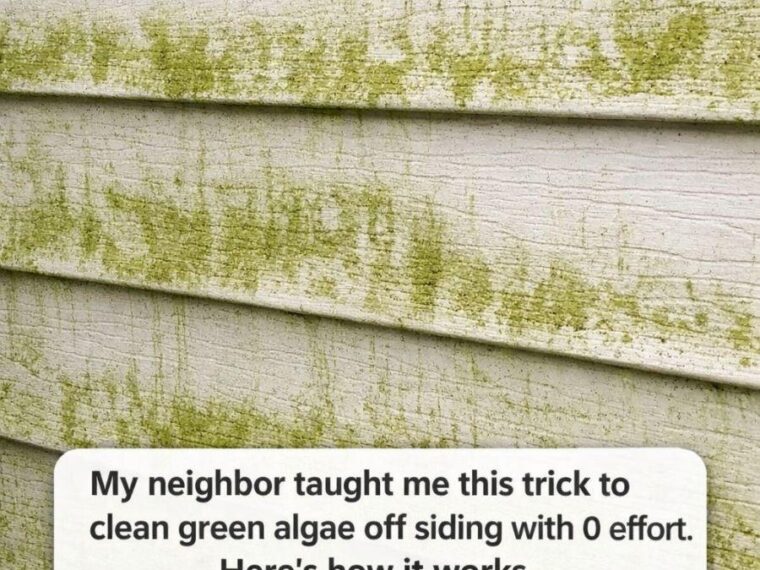
Algae growth isn’t random—it thrives in environments where moisture lingers. Vinyl siding, painted wood, and other exterior materials often trap water, especially on shaded sides of the house or under overhanging trees.
Key factors that promote algae growth:
- Shade: Less sunlight means moisture evaporates more slowly.
- Humidity: Damp environments feed algae colonies.
- Moisture retention in siding: Vinyl and paint can hold water longer than brick or stone.
- Organic residue: Dust, pollen, and dirt provide nutrients for algae spores.
By understanding these conditions, homeowners can not only remove algae effectively but also reduce future growth. The combination of spraying a cleaning solution and improving airflow or sunlight exposure prevents algae from returning.
3. The Science Behind the Solution
The household ingredients in this no-scrub spray have specific properties that make them ideal for algae removal:
- White Vinegar: Its acidity weakens algae cell walls and disrupts growth.
- Dish Soap: Reduces surface tension, helping the solution stick to vertical siding and penetrate stubborn algae patches.
- Water: Dilutes the solution to prevent damage to siding while allowing even coverage.
When applied, the solution kills the algae at the root rather than just removing the surface color. Over time, this prevents regrowth in the same spot, making it a long-lasting solution.
4. Additional Tips for Preventing Algae Growth
While this spray trick is excellent for cleaning, prevention is just as important. Here’s what homeowners can do:
- Trim Overhanging Branches: More sunlight means less moisture and slower algae growth.
- Improve Drainage: Direct gutters and downspouts away from siding to prevent water pooling.
- Clean Debris Regularly: Remove leaves and organic matter that hold moisture.
- Wash Siding Periodically: Even a light rinse helps reduce spores settling on the surface.
Combining the spray method with preventive measures ensures your siding stays cleaner for longer.
5. Why This Trick Is a Game-Changer
Most traditional methods—pressure washing, scrubbing, or strong chemical cleaners—require time, physical effort, and sometimes a risk of damaging your siding. This spray-and-wait method:
- Saves Time: Minimal preparation, no scrubbing required.
- Is Gentle on Siding: Safe for vinyl and painted surfaces.
- Uses Household Ingredients: No expensive or toxic cleaners.
- Reduces Re-Growth: Targets the algae at the root.
Even if you’ve tried other methods without success, this technique often produces immediate, noticeable results with a fraction of the effort.
6. When to Consider Professional Help
While this method works for most green algae, there are situations where professional intervention may be necessary:
- Extensive Coverage: If large portions of siding are covered, professional power washing may complement the spray.
- Persistent Algae: Some older siding or very shaded areas may require repeated treatments.
- Mold or Mildew Concerns: If there’s black mold mixed with algae, a more specialized treatment may be needed.
For most everyday homeowners, though, this no-scrub method is sufficient.
7. Final Thoughts
Green algae doesn’t have to be a time-consuming chore. By using a simple spray solution, you can clean your siding with almost zero effort and maintain a fresh, inviting home exterior.
Understanding why algae grows on your siding—moisture, shade, and organic buildup—also helps prevent future growth, so your home stays clean longer.
Sometimes the most effective tricks are the simplest, and this neighbor-approved method proves that a little knowledge and a household sprayer can go a long way.
Next time your siding develops those annoying green streaks, remember: you don’t need to scrub, climb ladders, or spend hours—you just need the right mixture, a sprayer, and a little patience.
Your home will thank you for it.