
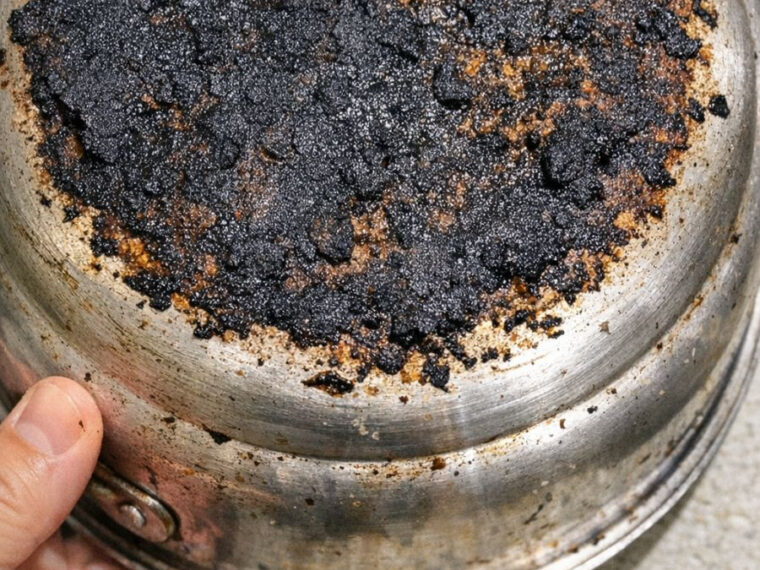
Here’s the method he swore by.
What You’ll Need:
- Water
- White vinegar
- Baking soda
- A stovetop
That’s it.
Step 1: Add Water and Vinegar
Fill the scorched pan with enough water to cover the burned area. Then add about ½ cup of white vinegar.
Place the pan on the stove and bring the mixture to a gentle boil.
Almost immediately, you’ll notice something interesting — the dark residue begins loosening as the liquid simmers.
Step 2: Remove From Heat and Add Baking Soda
Once the mixture reaches a boil, turn off the heat and carefully add 2–3 tablespoons of baking soda.
Stand back for a second — it will fizz!
This reaction is the magic. The bubbling action helps lift the burnt particles from the surface of the pan without scrubbing.
Let the mixture sit for about 10–15 minutes.
Step 3: Wipe — Don’t Scrub
After the pan cools slightly, pour out the liquid. Using a soft sponge or cloth, gently wipe the surface.
In most cases, the burnt layer slides right off.
No steel wool.
No aggressive scraping.
No ruined nonstick coating.
Why This Works
The science is surprisingly simple.
- Vinegar is acidic and helps break down stubborn, carbonized food particles.
- Baking soda is mildly abrasive and reacts with vinegar to create carbon dioxide bubbles.
- The fizzing action physically lifts debris from the surface.
- Heat accelerates the breakdown process.
Together, they loosen the bond between burnt food and metal — without damaging your cookware.
Bonus Tip for Stubborn Stains
If a few dark spots remain:
- Sprinkle a thin layer of baking soda directly onto the damp surface.
- Let it sit for 5–10 minutes.
- Wipe gently with a sponge.
For extremely tough buildup, you can repeat the boiling process once more.
What About Nonstick or Cast Iron?
- Nonstick pans: Avoid aggressive scrubbing and skip harsh abrasives. The vinegar-and-water boil method is generally safe, but always use a soft sponge.
- Cast iron pans: Do NOT use vinegar soaking for long periods, as it can strip seasoning. Instead, use coarse salt and a bit of oil to scrub gently.
Grandpa always said, “Know your pan before you clean it.”
Why This Trick Beats Scrubbing
Most people instinctively attack a burnt pan with force. But scrubbing too hard can:
- Scratch stainless steel
- Destroy nonstick coatings
- Strip seasoning from cast iron
- Wear down the surface over time
This gentle chemical reaction does the heavy lifting for you.
It turns a frustrating 30-minute battle into a 10-minute fix.
The Real Lesson Grandpa Taught Me
Yes, this trick cleans a scorched pan.
But the deeper lesson?
Don’t panic.
Don’t force things.
Use simple solutions before complicated ones.
In cooking — and in life — patience and the right approach make all the difference.
Now whenever I accidentally burn something (and it still happens), I don’t stress. I just reach for vinegar and baking soda.
And every time, it feels like Grandpa is right there in the kitchen, smiling.
If you’ve got a scorched pan sitting in your sink right now, give this trick a try. You might be surprised how something so simple can work so well.