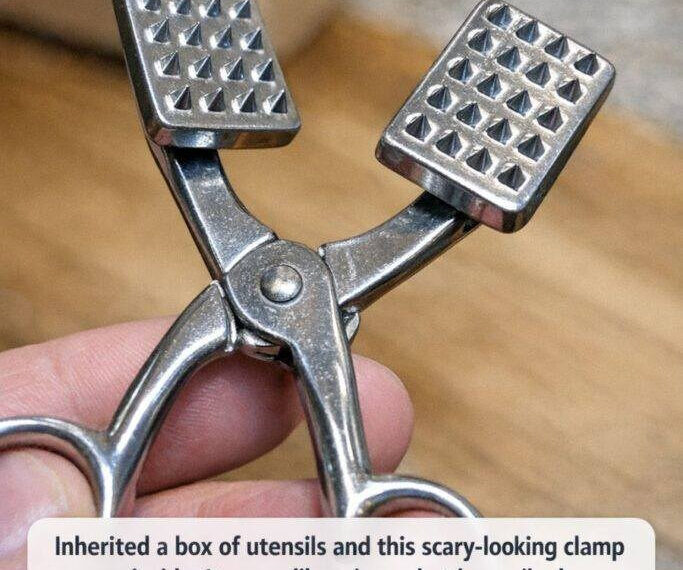
Inheriting a box of utensils can be a fascinating journey into the past, a tangible connection to previous generations and their daily lives. Among the familiar spoons, forks, and knives, you may stumble upon curious items that spark a sense of mystery and intrigue. One such item might be a peculiar clamp that, at first glance, seems more at home in a medical setting than a kitchen. Its unusual design, with scissor-like handles and menacing spiked plates, can easily evoke a sense of unease and fascination.
Before you assume you’ve uncovered a vintage surgical instrument, take a deep breath. Chances are, this intimidating-looking object has a far more domestic — and much less dramatic — purpose.
Let’s unravel the mystery.
First Impressions: Why It Looks So Medical
The human brain associates metal clamps, spikes, and scissor mechanisms with hospitals and surgical tools. The design language is similar: durable steel, hinged arms, firm grip mechanisms. Older household tools were often built with the same utilitarian aesthetic as early medical equipment — functional, sturdy, and built to last.
The spiked or ridged plates at the end of the clamp are particularly alarming. They may look like they’re designed to grip tissue, but in reality, they were likely meant to grip something far less frightening.
In fact, this tool is almost certainly a vintage kitchen or household implement.
Most Likely Identity: A Vintage Ice Tongs or Ice Block Clamp
Before modern refrigerators became common in homes during the early-to-mid 20th century, people relied on large blocks of ice to keep food cold in iceboxes. These blocks were heavy, slippery, and difficult to handle without proper tools.
That’s where ice tongs came in.
The clamp you discovered strongly resembles antique ice tongs. These tools were designed with:
- Scissor-like handles for leverage
- Spiked or serrated metal plates to grip ice securely
- A strong hinge mechanism
- Heavy-duty steel construction
The spikes were necessary to dig into solid ice blocks, preventing slippage while carrying the heavy load from delivery wagon to icebox.
Far from being a surgical instrument, it was likely a practical household necessity in its time.
How Ice Delivery Worked in the Past
In the late 1800s and early 1900s, ice delivery was a common service in many towns and cities. Ice was harvested from frozen lakes during winter, cut into large blocks, stored in insulated icehouses, and delivered year-round.
The iceman would arrive with a horse-drawn wagon (and later a truck), carrying massive ice blocks. Using sturdy tongs similar to the one you found, he would hoist the ice onto his shoulder and deliver it directly into the customer’s icebox.
Children often watched eagerly, sometimes receiving small ice chips as treats on hot days.
Your “scary clamp” may have once been part of that daily ritual.
Other Possible Identifications
While ice tongs are the most common explanation, depending on the exact design, your mysterious clamp could also be one of the following:
1. Antique Coal Tongs
Used for picking up hot coals from fireplaces or stoves. These typically have gripping ends designed to hold irregular shapes.
2. Sugar Cube Tongs (Large Format)
Though smaller versions were common for tea service, some larger hospitality tools resembled clamps.
3. Canning Jar Lifter
Certain older jar lifters had gripping ends to safely remove hot glass jars from boiling water baths during home canning.
4. Laundry Boiler Clamp
Some early laundry equipment used gripping tools to remove fabric from boiling wash pots.
The size, weight, and spike shape will help determine its true purpose. Ice tongs are usually fairly large and heavy.
Why Old Tools Look Intimidating
Modern kitchen gadgets are often designed with plastic handles, bright colors, and rounded edges. In contrast, vintage tools were made primarily from forged steel or cast iron. Their purpose was durability, not aesthetics.
Function dictated form.
Sharp teeth or spikes weren’t meant to frighten — they were engineered for grip. Heavy construction wasn’t excessive — it ensured the tool would last decades.
In fact, many antique tools still function perfectly today, long after their modern counterparts would have broken.
Signs It’s Not Medical
If you’re worried about a surgical origin, here are some reassuring clues:
- Medical instruments are typically engraved with manufacturer markings or medical-grade stamps.
- Surgical clamps often have locking ratchets near the handles.
- True medical forceps are usually more delicate and precise in design.
- Household tongs lack the refined articulation seen in surgical tools.
Additionally, medical instruments were rarely stored casually with everyday kitchen utensils. If it came in a utensil box, that strongly suggests domestic use.
The Value of Antique Ice Tongs
Depending on age, brand, and condition, antique ice tongs can have modest collectible value. Many collectors appreciate them for their historical charm.
Some people repurpose them as rustic décor:
- Wall-mounted farmhouse accents
- Garden art
- Cabin decorations
- Conversation pieces in kitchens
They often spark nostalgia and storytelling, especially for those who remember ice delivery days.
How to Clean and Preserve It
If you’d like to restore your inherited clamp:
- Remove surface rust with fine steel wool or a vinegar soak.
- Dry thoroughly to prevent further corrosion.
- Apply a light coat of mineral oil to protect the metal.
- Avoid harsh sanding that removes patina if you want to preserve antique value.
The aged patina actually adds character and historical authenticity.
A Glimpse Into Domestic History
Objects like this remind us how different daily life once was. Refrigeration wasn’t automatic. Heating required tending. Laundry demanded boiling water and physical effort.
Tools were extensions of survival and routine.
That clamp represents a time when ice was harvested from frozen lakes, when kitchens operated without electricity, and when deliveries were part of neighborhood rhythms.
Inheriting such an item is like inheriting a small fragment of that world.
When Mystery Objects Spark Curiosity
It’s completely natural to be puzzled — even slightly alarmed — when encountering unfamiliar vintage tools. Many everyday items from the past now look unusual because technology has made them obsolete.
If you’re ever unsure about an antique object:
- Compare its size and shape to known tools online.
- Look for maker’s marks stamped into the metal.
- Consider the context in which it was found.
- Ask older relatives if they recognize it.
Often, someone will smile and immediately identify it.
Why It Feels So Fascinating
Part of the intrigue comes from contrast. The clamp’s severe design clashes with our modern expectations of household items. We’re accustomed to soft edges and sleek minimalism. Older tools, by comparison, appear almost industrial.
But that raw functionality tells a story.
It tells of frozen winters, early mornings, heavy lifting, and practical ingenuity. It reflects a time when craftsmanship prioritized strength and longevity over appearance.
And perhaps that’s what makes it special.
Final Thoughts
So, is your inherited clamp a medical device? Almost certainly not.
More likely, it’s a sturdy relic from the era of ice delivery — a hardworking tool that once gripped massive ice blocks with those very spikes that now look so intimidating.
Instead of something sinister, you’ve probably uncovered a charming piece of domestic history.
Rather than hiding it away, you might consider displaying it as a conversation starter. It’s a reminder of how far household technology has come — and how resourceful previous generations had to be.
Sometimes, the scariest-looking objects turn out to have the most ordinary — and fascinating — stories behind them.