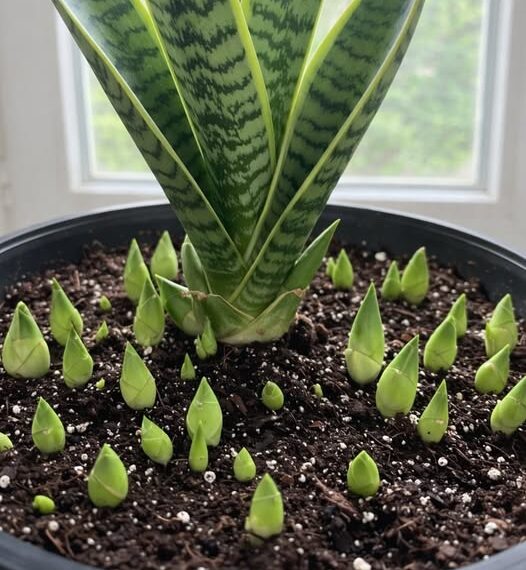
Snake plants (Sansevieria, now classified as Dracaena) are among the toughest and most rewarding houseplants you can grow. They tolerate low light, irregular watering, and neglect better than most plants. But the real joy comes when your snake plant starts producing pups—those small offshoots that emerge from the soil and eventually become full-sized plants.
If your snake plant looks healthy but refuses to produce pups, don’t worry. With a few intentional adjustments, you can encourage it to multiply faster and more reliably. Understanding how snake plants grow—and what triggers pup production—is the key to turning one plant into many.
Understanding How Snake Plants Produce Pups
Unlike plants that propagate through stems or flowers, snake plants spread through rhizomes. These are thick, underground stems that store energy and send out new shoots when conditions are favorable.
When a snake plant feels slightly challenged—but not stressed—it responds by pushing out rhizomes in search of space and resources. Those rhizomes eventually break the soil surface as pups.
Your goal is to create an environment that tells the plant: “It’s time to expand.”
Use Pot Size to Your Advantage
One of the most overlooked factors in pup production is pot size.
Snake plants actually prefer being slightly root-bound. When planted in a pot that’s too large, the plant focuses on growing roots instead of producing pups. In contrast, a snug pot creates mild root stress that encourages rhizome growth.
Best practice:
- Choose a pot only 1–2 inches wider than the root ball
- Avoid oversized containers
- Repot only when roots are clearly overcrowded
Terracotta pots are especially effective because they improve airflow and help prevent excess moisture, which can slow or stop pup production.
If your snake plant has been sitting in a large pot with no growth for months, downsizing the pot can trigger new pups surprisingly quickly.
Give It More Light Than You Think
Snake plants survive in low light—but survival is not the same as growth.
To encourage pups, place your plant in bright, indirect light for 6–8 hours per day. The more energy the plant can photosynthesize, the more likely it is to invest that energy into producing rhizomes.
Ideal locations include:
- Near a bright east- or south-facing window
- Filtered sunlight through sheer curtains
- Under a grow light if natural light is limited
Many growers notice pup development within weeks of moving a snake plant from a dim corner to a brighter location.
Water Less Often—but More Intentionally
Next page