
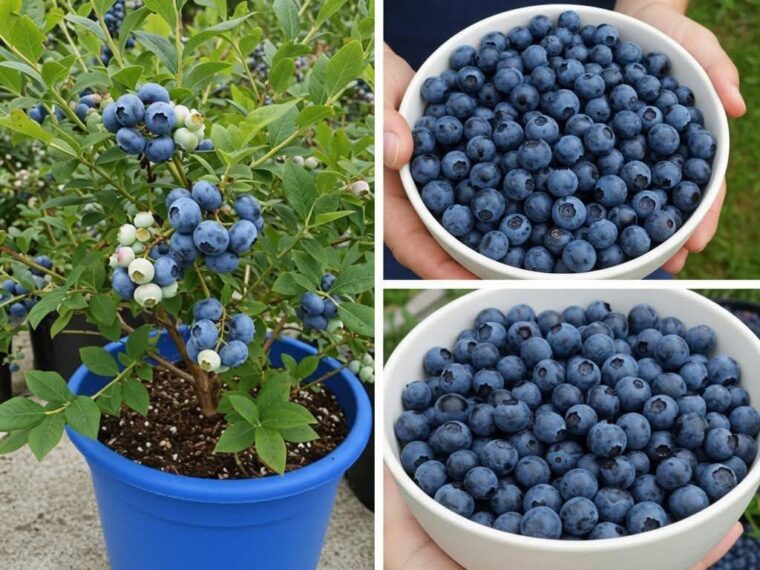
Growing your own blueberries isn’t just a delicious idea—it’s also a smart, sustainable way to enjoy years of fresh, organic fruit right from your backyard. With a little planning and the right care, a single blueberry bush can produce fruit for 20 years or more, giving you a consistent harvest every summer.
Whether you’re a beginner or a seasoned gardener, this guide will show you exactly how to grow a never-ending supply of blueberries in your own space — even if your yard is small. From selecting the right variety to watering, pruning, and harvesting, this step-by-step approach ensures your blueberry plants thrive for decades.
🌱 Why Grow Your Own Blueberries?
Before diving into the practical steps, it’s worth considering why blueberries are such a valuable addition to any backyard garden:
✅ Economical: Store-bought blueberries can be expensive, especially organic ones. A few bushes in your yard can produce pounds of fruit each season, saving money in the long run.
✅ Nutrient-rich: Blueberries are packed with antioxidants, vitamin C, vitamin K, and fiber, making them a superfood for your family’s health.
✅ Long-living plants: With proper care, blueberry bushes can produce fruit for 20 years or more, providing a steady supply for decades.
✅ Low-maintenance: Once established, blueberries are hardy and require minimal upkeep compared to other fruiting plants.
✅ Beautiful landscape: They are not only productive but also attractive. Blueberries bloom with delicate white or pink flowers in spring, bear fruit in summer, and transform into vibrant red or orange foliage in fall.
📍 Step-by-Step Guide: Growing Endless Blueberries
1. Choose the Right Variety
There are several types of blueberry bushes. Selecting the right variety ensures strong growth and a productive harvest. Here’s a breakdown:
- Highbush (Vaccinium corymbosum) – Best for cold to mild climates, produces large, sweet berries. Most commonly grown in the U.S.
- Rabbiteye (Vaccinium ashei) – Tolerates heat better, ideal for southern states, yields slightly smaller berries but produces heavily.
- Lowbush (Vaccinium angustifolium) – Cold-hardy and low-growing, often used in northern regions; berries have a rich, wild flavor.
🔁 Tip: Plant two or more varieties close together. Blueberries are partially self-fertile, but cross-pollination improves yield, berry size, and flavor.
2. Pick the Right Spot
Location is critical for blueberry success. Consider the following:
- Full sun: Blueberries need 6–8 hours of sunlight per day. More sun equals sweeter, larger berries.
- Acidic soil: Ideal pH is 4.5–5.5. Blueberries struggle in neutral or alkaline soil.
- Well-drained, moist, organic-rich soil: Avoid heavy clay or areas that stay soggy after rain.
🧪 Test your soil: Home pH kits are inexpensive and easy to use. If your soil is too alkaline, amend it with:
- Peat moss
- Pine needles
- Elemental sulfur
Adding compost improves soil structure and provides nutrients without harming the delicate root system.
3. Planting Your Blueberries
Timing: Early spring or late fall is ideal. Planting when the weather is mild reduces stress on new bushes.
Spacing:
- Highbush: 4–5 feet apart
- Rabbiteye: 6 feet apart
- Lowbush: 2 feet apart
Steps:
Next page