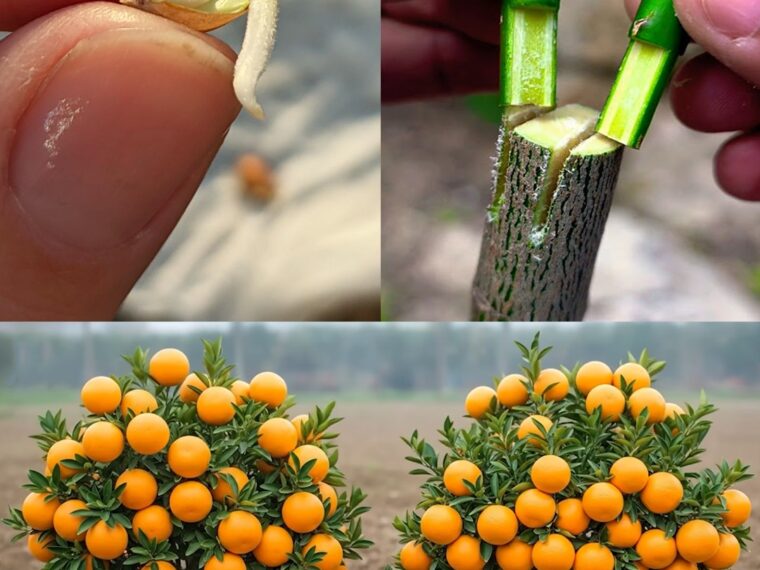
- Extract fresh seeds from an organic orange.
- Rinse them thoroughly to remove pulp.
- Wrap seeds in a damp paper towel, place in a sealed bag, and keep them warm.
- After 1–2 weeks, they will sprout.
- Plant each seedling in a small pot with citrus-specific soil mix.
Option B: Grafted Citrus (Recommended)
Grafting involves joining a desired fruiting variety onto a strong rootstock. This is the preferred method for faster fruit production and reliable quality:
- Fruits appear in 1–2 years
- Stronger root system and healthier growth
- Predictable fruit quality and tree vigor
Most nursery-bought orange trees are already grafted—look for the small junction on the trunk where the scion meets the rootstock.
3️⃣ Choosing the Right Pot
Pot Size
- Starter pot: 10–12 inches (25–30 cm)
- Upgrade as tree grows: 18–24 inches (45–60 cm)
Pot Requirements
- Good drainage holes to prevent root rot
- Non-metallic material: plastic, wood, or terracotta
- Lightweight options are ideal if you need to move your pot
Placement
- 6–8 hours of direct sunlight daily
- Warm, wind-protected location to prevent stress
- Avoid overly shaded areas; citrus trees thrive in bright, sunny conditions
4️⃣ Best Soil for Citrus Trees
Citrus trees prefer well-draining, slightly acidic soil. A quality mix usually contains:
- Peat or coir for moisture retention
- Sand or perlite for drainage
- Organic compost for nutrients
💡 Tip: Avoid heavy clay soils that retain too much water, which can lead to root rot.
5️⃣ Watering and Feeding
- Watering: Keep the soil consistently moist but not soggy. Water deeply and allow the top 1–2 inches to dry between watering.
- Fertilizing: Citrus trees benefit from balanced fertilizer high in nitrogen. Use slow-release fertilizers or feed monthly with a liquid fertilizer during the growing season.
- Mulching: A thin layer of mulch helps retain moisture and regulates soil temperature.
6️⃣ Pruning and Maintenance
- Prune dead, damaged, or crowded branches to improve airflow
- Shape the tree to maintain a compact size suitable for containers
- Remove any suckers growing from the rootstock to focus energy on fruiting branches
7️⃣ Common Issues to Watch For
- Yellow leaves: Often a sign of nutrient deficiency or overwatering
- Pests: Aphids, spider mites, and scale insects can infest citrus. Use insecticidal soap or neem oil if necessary
- Fruit drop: Often caused by irregular watering or sudden temperature changes
8️⃣ Harvesting Your Oranges
- Home-grown oranges are usually ready to pick 6–12 months after flowering
- Check for color, firmness, and fragrance; fruit should feel heavy for its size
- Harvest with care to avoid damaging branches or leaves
🌟 Final Tips for Growing Oranges in Pots
- Start with a dwarf variety for easier management
- Be patient—seed-grown trees take time to fruit
- Monitor water, sunlight, and temperature regularly
- Consider indoor placement during winter if you live in cooler climates
With attention and care, your potted orange tree can produce fragrant blossoms and delicious fruit for years to come, turning even a small balcony into a mini citrus garden.
Pages: 1 2