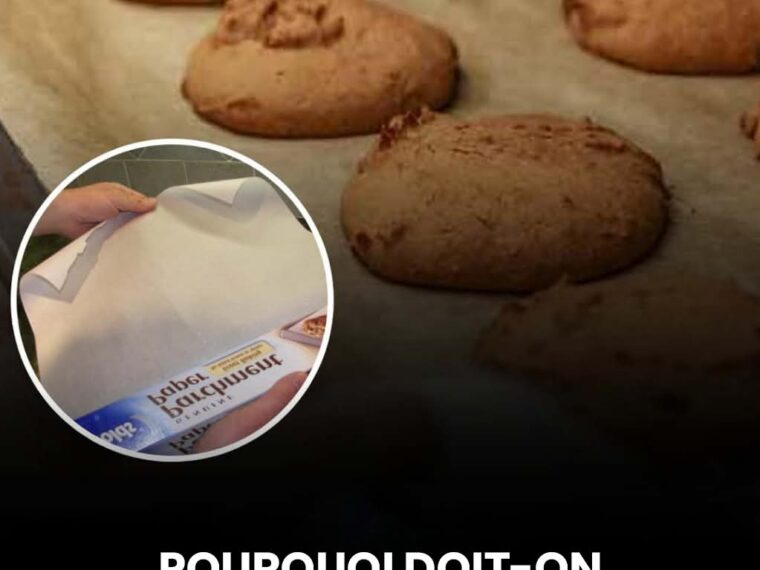
Who hasn’t reached for a sheet of parchment paper to guarantee a perfect batch of cookies or to spare themselves the dreaded scrubbing session after a gratin? Convenient, non-stick, disposable, and seemingly harmless, parchment paper has become a staple in many kitchens. It appears to tick all the boxes of the ideal cooking accessory.
But behind its reassuring appearance and wide-spread use, a few lesser-known details deserve a closer look. Could this faithful companion of our ovens be hiding a few secrets—some of them perhaps not so appetizing?
In recent years, discussions about the safety of certain cooking materials have grown louder. We scrutinize plastics, question certain coatings on pans, and pay closer attention to how heat interacts with materials that come into contact with food. Parchment paper, despite being considered benign, is not exempt from these questions. Understanding how it’s produced and how it behaves during cooking can help you make better, safer, and more sustainable choices in the kitchen.
Bleaching: A Step That Raises Questions
If parchment paper is so bright white, it’s not by accident. That color comes from a bleaching process used during fabrication. Traditionally, this is achieved through chlorine-based compounds designed to whiten and purify the paper pulp.
However, some bleaching processes can generate chemical residues—such as dioxins or chlorine by-products—that may migrate into food, especially when exposed to high heat. While modern regulations significantly restrict the presence of harmful compounds, the topic continues to spark debate among health-conscious consumers.
The issue isn’t necessarily that parchment paper is dangerous, but rather that unnecessary exposure to chemical residues can be avoided when alternatives exist. The risk may be small, but it isn’t zero—and many people prefer to err on the side of caution, especially for frequent use.
The Smart Tip
To reduce this potential risk, opt for unbleached parchment paper, easily identifiable by its natural light-brown color. This type of paper skips the whitening process altogether, making it more environmentally friendly and more reassuring in terms of composition. It performs the same tasks—non-stick protection, moisture resistance, and easy cleanup—without the questions attached to bleaching agents.
Beyond health considerations, unbleached parchment paper tends to be compostable (when not stained with fatty foods), which is another advantage for eco-minded cooks.
The Silicone Coating: Not as Innocent as It Seems
Another key point to know: many parchment papers owe their non-stick properties not just to their structure, but also to a thin layer of silicone applied to the surface. Silicone is valued for its heat resistance, flexibility, and durability. It’s widely used in baking mats, spatulas, and molds.
Still, the coating raises two main concerns:
1. What happens at very high temperatures?
Most parchment paper is safe up to around 220–230°C (425–450°F). Beyond this threshold, the silicone and the paper itself may begin to degrade. When overheated—such as during broiling, grilling, or direct exposure to heating elements—silicone can potentially release small amounts of compounds.
Although research suggests food-grade silicone is generally safe, scientists are still studying what happens when it repeatedly reaches high temperatures or interacts with fatty substances, which can accelerate breakdown.
2. Additives and quality variations
Not all silicone coatings are equal. High-quality, food-grade silicone is considered stable, but cheaper products may contain additives or fillers that are less controlled. Since parchment paper is disposable and often produced at scale, quality differences between brands can be significant.
The Right Reflex
If you want peace of mind and prefer to avoid wondering what might be released when silicone is heated, consider switching to durable, reusable alternatives with no chemical coatings. These options often offer better performance and long-term savings.
Clever Alternatives for Safer, Stress-Free Cooking
Fortunately, there are multiple reliable and accessible options that can replace parchment paper without sacrificing taste, convenience, or cooking precision. Depending on what you’re making, some of these alternatives might even improve the quality of your dishes.
1. Stainless Steel: The Indestructible Classic
Stainless steel baking sheets, trays, and pans are beloved for their durability and safety. They contain no coatings, no chemical treatments, and no hidden components that can degrade with heat.
Why choose stainless steel?
- It withstands very high temperatures without releasing anything.
- It offers even heat distribution for better browning and cooking.
- It’s easy to clean, especially when used with a bit of oil or a removable baking mat.
Stainless steel’s only drawback is that it isn’t naturally non-stick. However, a light coating of oil or butter often solves this problem. For roasted vegetables, pastries, or sheet-pan meals, it is a reliable everyday option.
2. Glass: Perfect for Gratin Dishes and Desserts
If you’re preparing casseroles, gratins, or cakes, glass cookware is an excellent alternative. Borosilicate glass, in particular, is extremely resistant to sudden temperature changes and doesn’t react with acidic or salty foods.
Its advantages include:
- Total neutrality (no flavor or chemical transfer).
- The ability to visually monitor cooking thanks to its transparency.
- Easy cleaning and compatibility with microwaves, ovens, and dishwashers.
Glass retains heat well, making it ideal for dishes that need gentle and consistent cooking. It’s also visually appealing: many people enjoy serving food directly in a glass dish.
3. Ceramic: Elegant, Traditional, and Highly Effective
Next page